
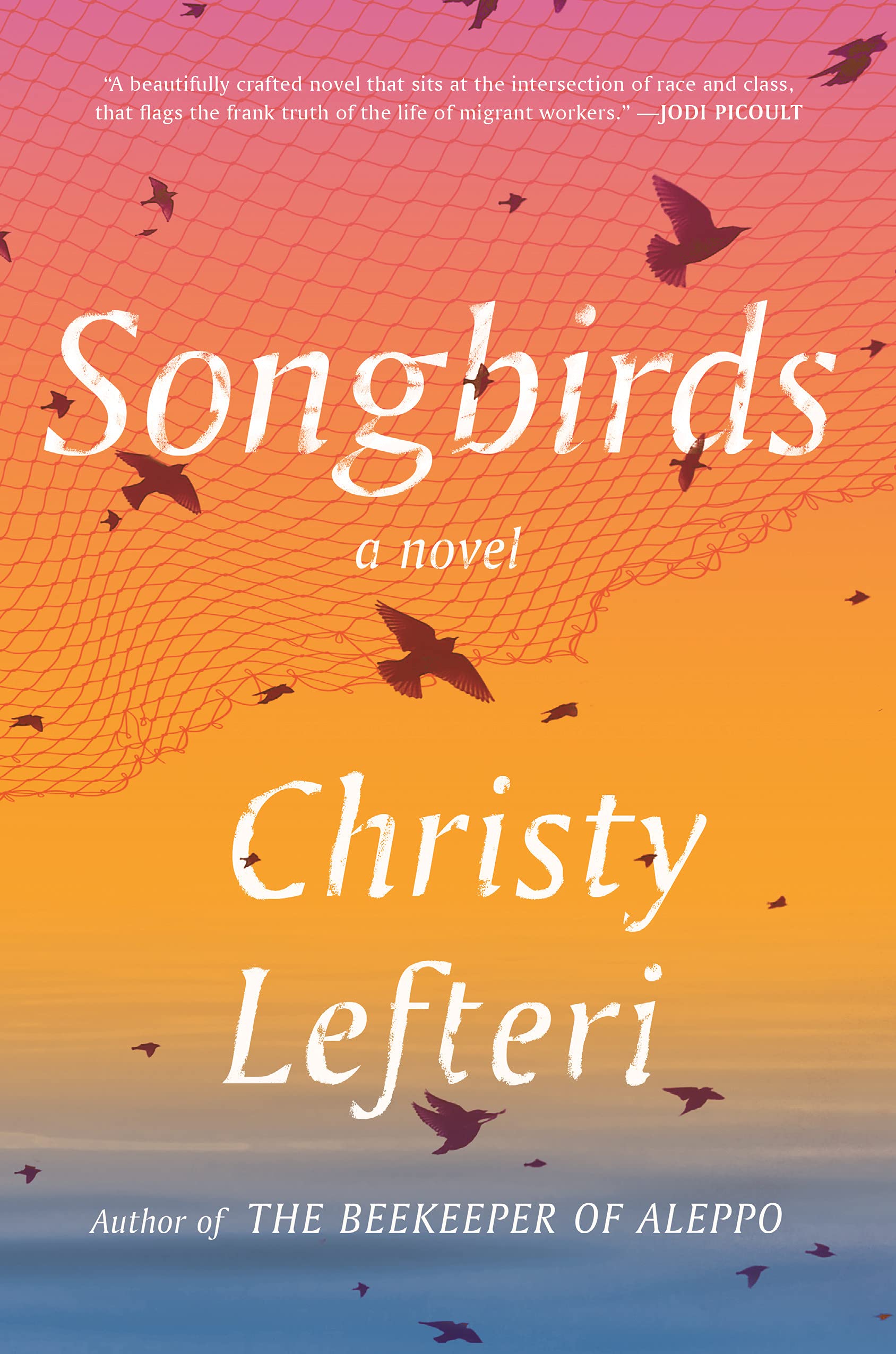

Title: Songbirds
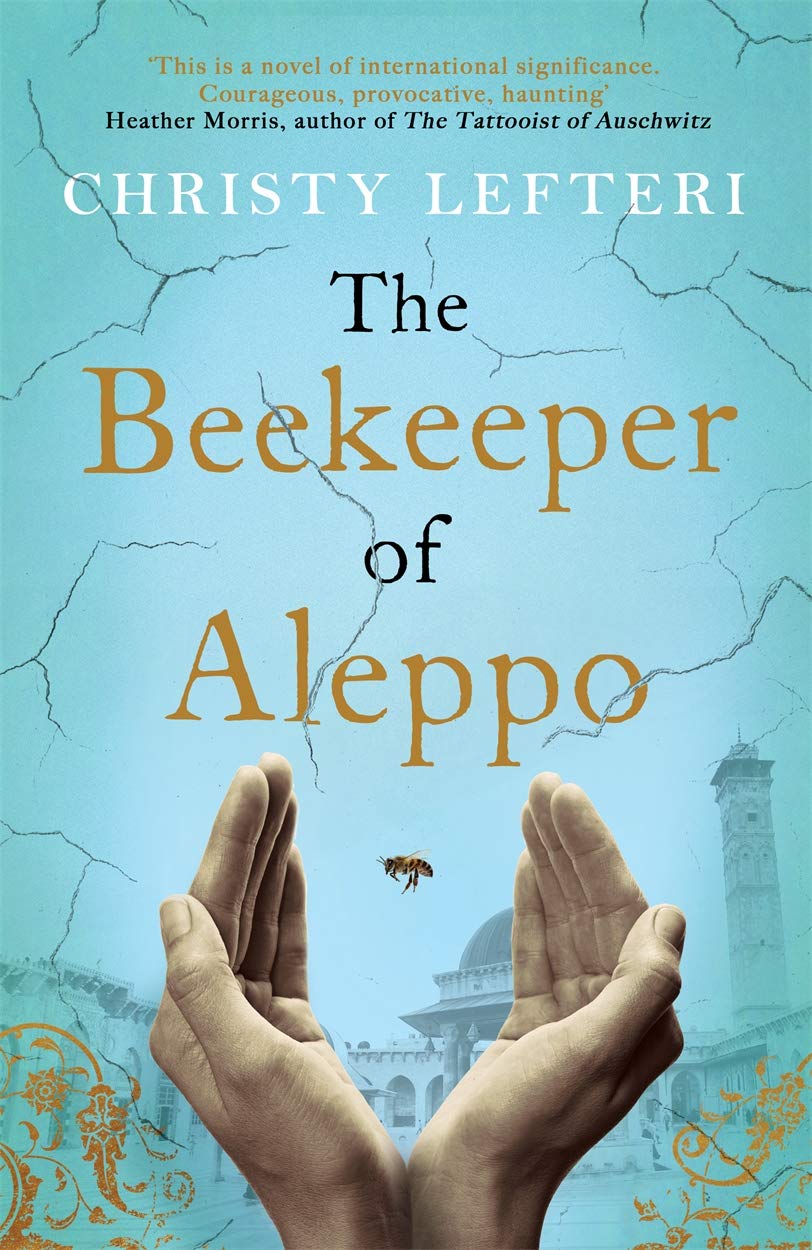
Title: The Beekeeper of Aleppo
Author: Christy Lefteri
Genre: Contemporary Fiction, Historical Fiction, Novel
Original Language: English
Christy Lefteri

Christi Lefteri was born in 1980 to Greek parents who were refugees from Cypress to London during the 1974 Turkish invasion. She completed her PhD in Creative Writing at Brunel University. She is now a lecturer there. Raised in London, her first novel ‘A Watermelon, a Fish and a Bible’ was released in 2010. ‘The Beekeeper of Aleppo’ was her second book released in 2019 which became a Sunday Times bestseller and the winner of the 2020 Aspen Words Literary Prize and was the runner-up for the Dayton Literary Peace Prize. Songbirds is her latest historical fiction novel released in 2020.
Songbirds
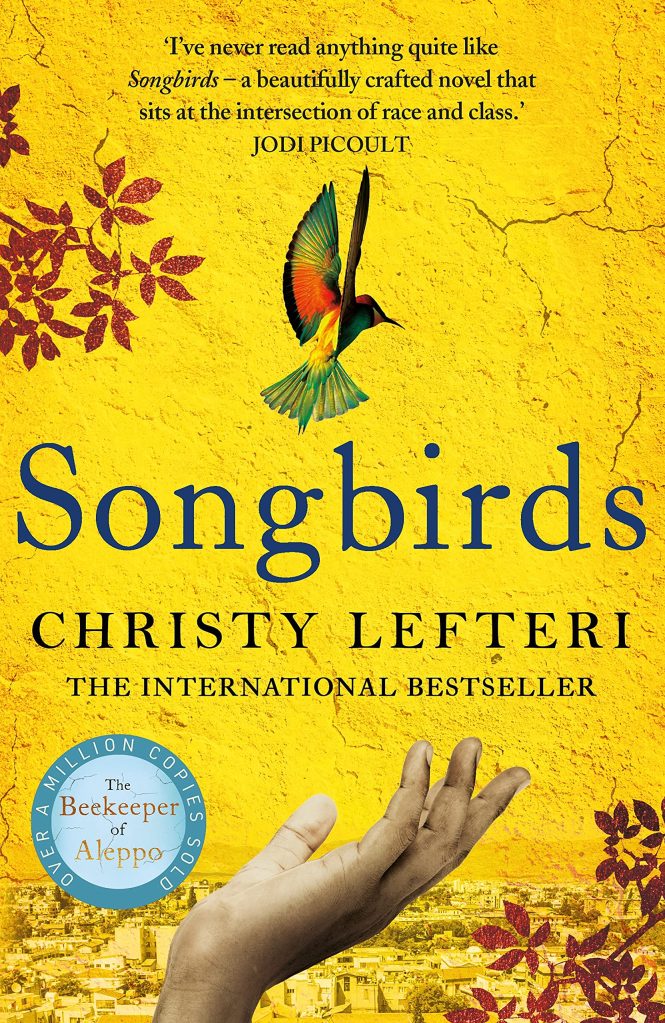
Songbirds is a beautifully crafted novel about the disappearance of Sri Lankan domestic migrant workers in Cypress and how people they are surrounded with show empathy and compassion towards this vulnerable section of their society.
“Yes, I love thinking about beginnings. I don’t like endings, though I suppose I’m like most people in that. An ending can be staring you right in the face without you knowing it.”
Inspired by the real disappearances of domestic workers in Cyprus, this novel has created waves of disturbance through its heavily empathetic and sad story about migrants seeking to earn a living miles away from their families.
Nisha is a Sri Lankan migrant worker in Cyprus who earns by working as a maid to a widow, Petra and her daughter, Aliki. Though she has crossed oceans to earn a decent living by providing care for Petra and Aliki, she longs for her own daughter who she left behind to be cared by her relatives.
The title Songbirds comes from the part that Yiannis plays in the story. He is a small time poacher of Songbirds who migrate from Africa to Europe every year and who also wishes to leave this job for he wants to marry Nisha. Nisha wants him to quit this job but he is entangled in a web of people who could kill him if he did.
“You see, we have to eat, and we have to survive, and yet we must protect our dignity and our identity. There are things we do to achieve those things. But we can respect the land and the animals that are on it. Always be kind to the land, the people, and the animals that are on it. Remember that. It’s the most important rule in the world.”
One night, Nisha disappears without a trace. Petra who had a good relationship with her maid started her investigation which led her to other migrant workers. There she came to know that there have been more such disappearances. Digging deeper, Petra started becoming aware of the vulnerable lives of these migrant workers who come miles away from their own home to earn a decent living for the families they have left behind. Though Petra and Yiannis try to notify the authorities, it was evident that they were not interested in runaway migrant workers as if they did not exist.
The poignant way this novel is written and the depth of the descriptions given throughout are what makes this book a bestseller. Nisha’s disappearance, Petra’s confusion, Yiannis’s longingness, Nisha’s daughter’s hopes, the cruel deceiving of the songbirds and the brutality of the situation renders the reader with a heavy heart and a damaged soul. Yet, the author instills hope. The distinct narrative and vivid descriptions make it a beautiful story with a very deep message.
“After the war, I learned a lesson I would never forget: how a person can disappear inside themselves, and that, sometimes, like my father, they are never able to find their way back.”
The Beekeeper of Aleppo
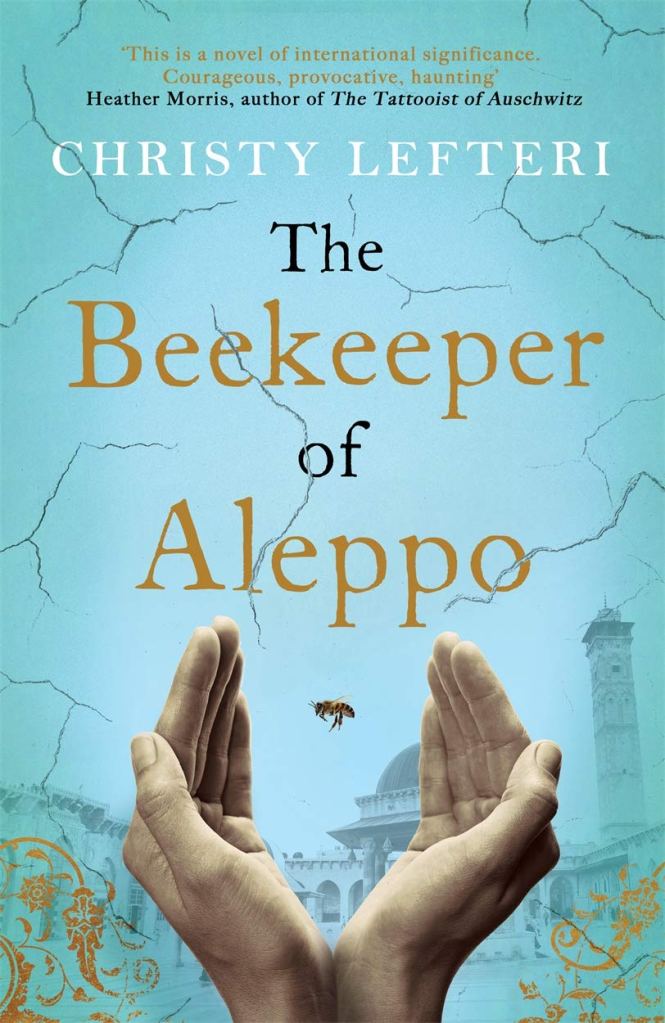
“Where there are bees there are flowers, and wherever there are flowers there is new life and hope.”
Christy Lefteri’s powerful and relevant novel, ‘The Beekeeper of Aleppo’ is an eye opener of the lives of displaced people in a war torn world. The story of a Syrian couple who had to flee their home in Aleppo indefinitely as the civil war razed their home to the ground is absolutely horrifying.
“The bees were an ideal society, a small paradise among chaos. But in Syria there is a saying: inside the person you know, there is a person you do not know. How she realized that we are less human in our times of greatest love and greatest fear. Sometimes we create such powerful illusions, so that we do not get lost in the darkness.”
The story revolves around Nuri, a beekeeper in Aleppo and his wife, Afra who lost her eyesight after their son got killed in an air raid. Leaving his bees behind was one of the most painful things for Nuri, yet he had one injured bee with him. It was more hope than the bee that he had with him by his side, a hope to live, a hope that he may be able to go back to his bees, a hope that his wife can see again and a hopeless hope that his son can come back from where he lay. The novel is brilliantly written, going forwards and backwards in time and emotions. The line between reality and PTSD hallucinations that Nuri was affected with is sometimes very very thin and the reader has absolutely no clue as to what is the truth and what is Nuri’s truth. They had lots of money to get a pass through to England, hopping at places they had not planned for but then, they hadn’t planned for any of this. Even with the money, the right kind of resources and availability made them feel poor, mainly because they were not able to make decisions of their choice and were practically dependent on so many different factors.
“People are not like bees. We do not work together, we have no real sense of a greater good ”
This is a well crafted and well structured novel and Christy perfectly portrays the once strong Nuri gradually succumbing to his inner wounds. The book doesn’t mention much politics of the situation, but gives an in depth feel of the perilous journey that many displaced victims of war had to take. The author narrates the plight of the refugees seeking asylum who after taking long and unbearable wanderings are refused entry at the borders and then they have to try other resources which may or may not be present at that time, their stash of money being rendered useless until some smuggler comes to their aid. All this is extremely painful to read. Humans treating humans absolutely inhumanly is the cost of war that innocent people have to pay to just keep living.
“I will never forget the silence, that deep, never-ending silence. Without the clouds of bees above the field, we were faced with a stillness of light and sky. In that moment, as I stood at the edge of the field where the sun was slanting across the ruined hives, I had a feeling of emptiness, a quiet nothingness that entered me every time I inhaled.”
The novel shows the power of hope in the form of a wingless bee far from her hive, just like Nuri, far from his home and his bees, yet compelled to live, and somehow reach Mustafa in Britain.
“Yuanfen, a mysterious force that causes two lives to cross paths in a meaningful way.”
The best takes from this novel to name a few are the neat parallel between Afra’s blindness and Nuri’s hallucinations, the jumping from reality to fiction in a sentence, the simultaneous presence of trauma and hope all through the story.
One of the best historical fictions I have read.
“They communicated without words from the most primitive part of the soul. I remembered her laughing about this, saying that she felt like an animal, and how she realized that we are less human in our times of greatest love and greatest fear.”
A comparison between Songbirds and The Beekeeper of Aleppo
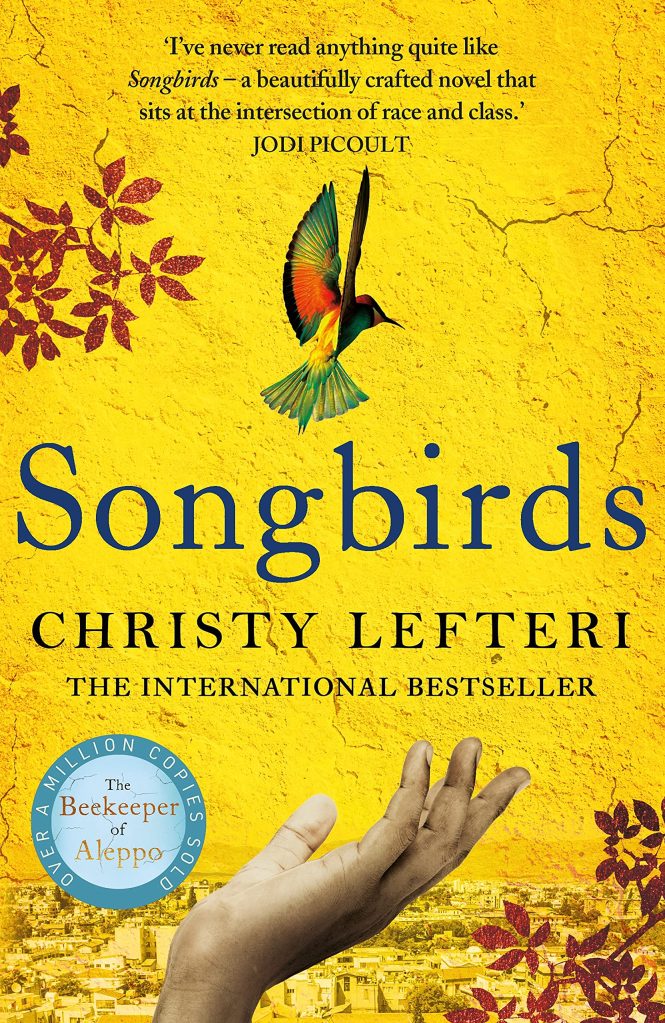
Both the novels, namely ‘Songbirds’ and ‘The Beekeeper of Aleppo’ are extremely well written, emotionally draining and hope driven. The world is a beautiful place where people make bad decisions and the repercussions are borne by the innocent. The stories in both these narratives show a behind the scenes act of displaced people, for different reasons, in different worlds but the same pain. Christy Lefteri is a remarkable writer who knows her way with the words. She can make a horrifying and an emotional statement go hand in hand. In either of the novels, she states the unheard problems of the migrants, their daily lives and the dangers that they have to bear on their shoulders, the depleting hope from their lives. Yet, Christy artistically proclaims hope to be the final winner. A hope, an anticipation of a better world by witnessing the wounds of the characters in her novels is what I call a master art and Christy a master artist.

 The Spell Bound