Kristin Harmel is a University of Florida graduate in Journalism. She is a New York Times Bestselling, and USA Today Bestselling Author. Harmel started writing when she was still in school. Her career began as a sports writer for a magazine. She then started reporting for the People magazine and others as well as contributed to The Daily Buzz. Born in Newton, Massachusetts she grew up in St. Petersburg, Florida, and has spent time in Ohio, L.A., and Paris before settling down in Orlando Florida with her husband and son. Her debut novel came out in 2006 and The Forest of Vanishing Stars came out in 2021. Her novels ‘The Winemaker’s Wife’ and ‘The Book of Lost Names’ are highly applauded in reader’s circles.
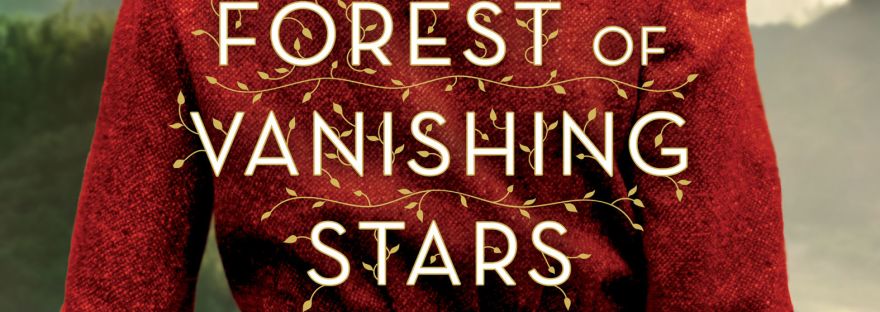
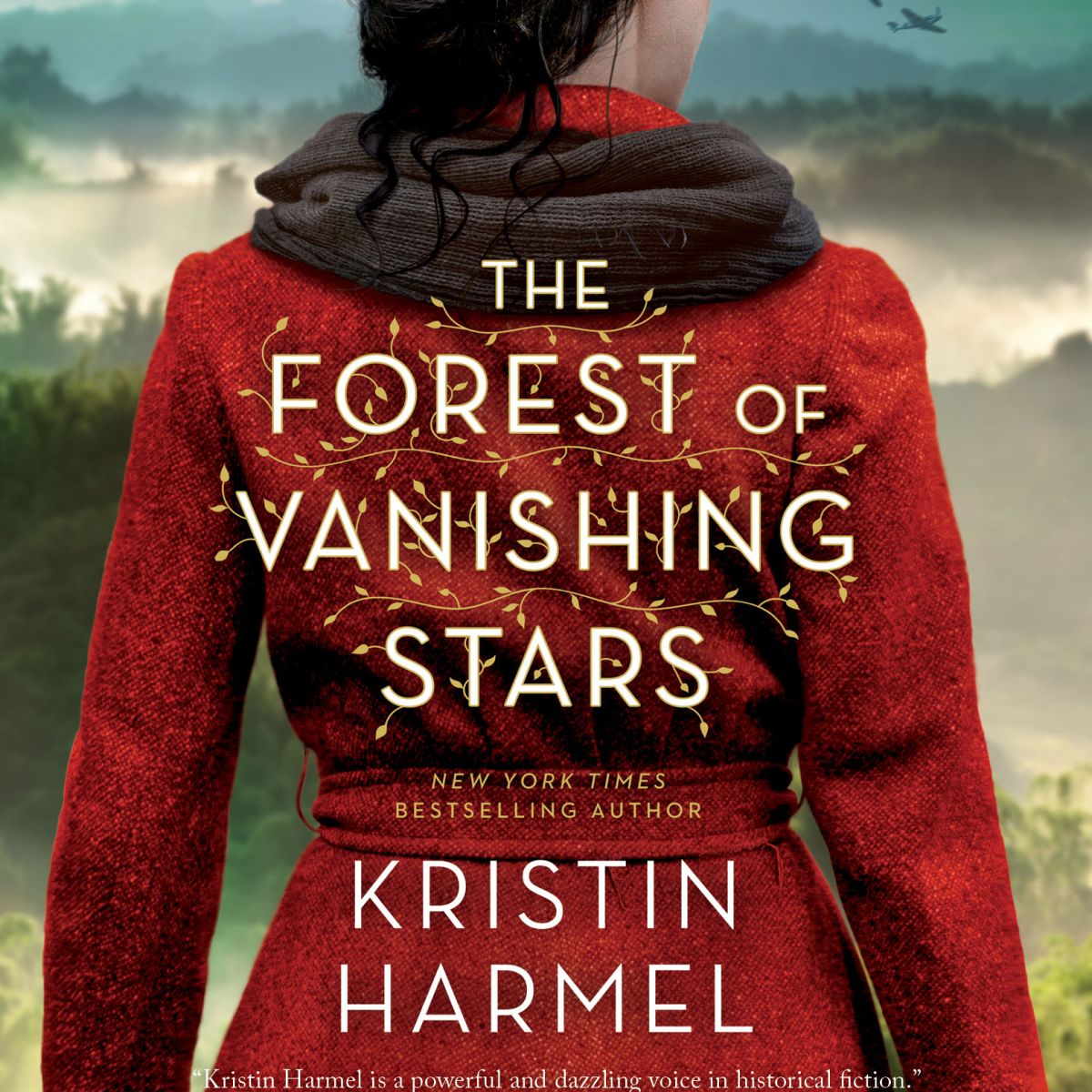
The Forest of Vanishing Stars
In the times of greatest darkness, the light always shines through, because there are people who stand up to do brave, decent things…in moments like this it doesn’t matter what you were born to be. It matters what you choose to become.
The Forest of Vanishing Stars is a superbly researched, meticulously written, and unforgettably inspiring World War novel. Like many other World War II novels, this also is a survival story of Jews trying to escape the ghettos. But this one stands out in the crowd of historical fiction books, mainly because of the unique plot and survival tactics, the coming of age perspective of a brainwashed child, and the poignancy with which the story unfolds. It is filled with thought provoking, tender and yet intense quotes, some of which stand out of the book in a way that they leave an imprint on the reader’s hearts:
“People should always help others in need; there was no other way for the human race to survive.”
Isn’t that true? Human race would have never pulled it through if they did not stand for each other when they started out, if they did not look out for each other in times of need, to hunt, in sickness, in seeking shelter, in moving in packs, or in building societies through to this day.
“Do not be afraid to ask your questions. But you must always be sure your heart is open to hear the answers.”
It is not easy to ask questions. Agreed. But once that is behind us, is it always easy to be ready for the answers your heart seeks, knowing that it may not be to our liking at all? However difficult it may be, even if a question deep dives into your heart and soul, it is best to be all open eyes and ears to muster the courage to behold them. Sound advice.
“The universe is always in balance, she said – summer and winter, day and night, sustenance and poison, good and evil. To know the light, you must also know the darkness.”
True, yin and yang work together to make the circle of life complete. Respect it !
“For when you love, you stand to lose so much. But I think you stand to lose far more when your heart is closed. That is no life.”
An open heart can make miracles happen. It helps you gather abundance of love when you may have to deal with loss. Put your trust in it. Choose love. Choose Kind.
“But the forest knew no difference when it came to race, religion, or gender; it smiled and frowned upon all of them in equal measure,”
Nature has no reason to differentiate. It is neither good nor bad, neither knowing nor unknowing, neither happy nor sad. Nature just IS. Like a spectator of the cosmos. Forest just knows to live, to just be itself, impartial to who you are or are not. You don’t exist as far as it is concerned. You feel good when you take a walk in the forest, but the forest doesn’t care. It just exists.
“Lives are circles spinning across the world, and when they’re meant to intersect again, they do. There’s nothing we can do to stop it.”
Its a small world even though we may debate that it is massive, which it is. Why, you ask. We live one life, we go around the world, living our individual lives, not knowing what is in store for us up ahead. But fate has all set in its plan. It chooses to make us bump into each other or revisit places and nothing, I mean nothing can stop it or change its course. Is it possible that we are caught unaware because we are unable to see it coming. Its like a hidden agenda and we have an unknowing yet active part in it. We are like puppets. We dance to the tunes we don’t know exist.
“I’m broken, too. But sometimes it’s the jagged edges that allow us to fit together. Sometimes it’s the breaks that make us strong.”
Life is like a jigsaw puzzle… and every piece must align itself to make it work. Its not broken, its just uneven for a reason. Find the reason, fit the pieces, and what you have will be so strong that no wind can blow it away. Kristin knows how to make her readers savor this evocative story. Brokenness is within every one of us. We just need to know how to deal with it.
“And you’re not broken, Yona. It’s the cracks in us that make us who we are, and you… you are stronger than anyone I have ever met, I think.”
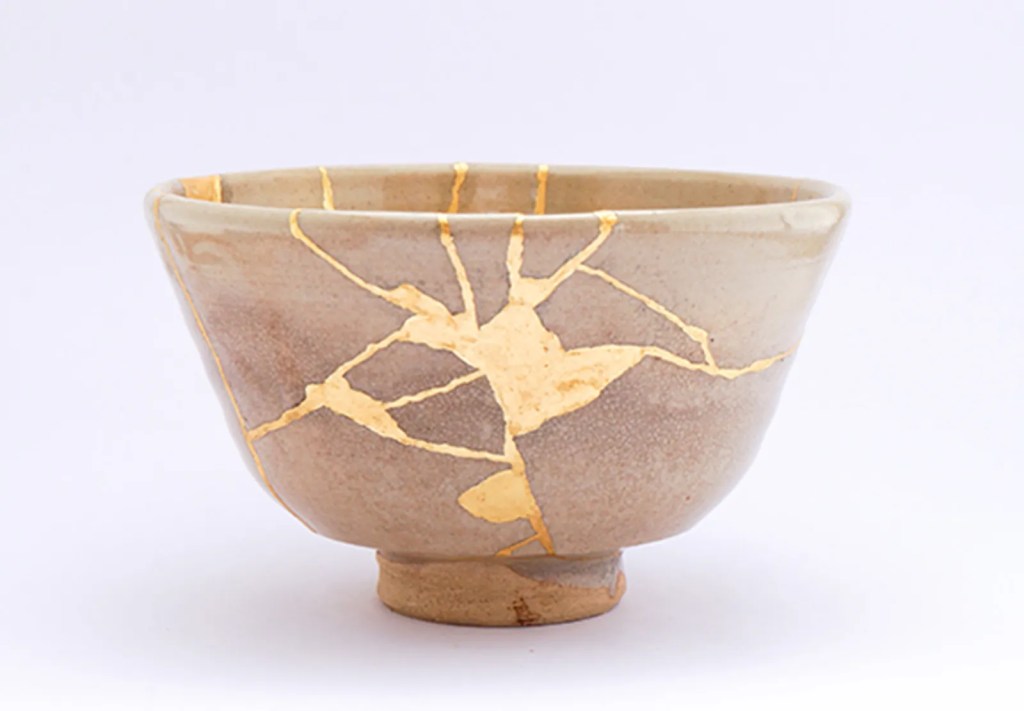
This particular quote from The Forest of Vanishing Stars reminds me of the ancient Japanese practice of embracing imperfection called Kintsugi. We all have crack lines in our souls, some deeper than others. But truly they are what makes us all unique. They are meant to make us stronger, bolder, braver compelling us to just keep going on, no matter the odds. Just like the golden paint on broken tea cups in the art of Kintsugi, we have to paint our cracks and crevices with the golden hue of our souls and help heal the broken hearts.
I had heard and read a lot of reviews about Kristin Harmel’s works. When I picked The Forest of Vanishing Stars, I was not aware of the intensity with which this wonderful novel will hit me. I am glad I did not mistake it for another world war novel. This is different. You will see. You should read it.
Genre: Novel, Coming of Age, Religious Fiction, Metaphysical Fiction, Bildungsroman Novel, LGBT Literature
Original Language: English
Plot Setting: India and USA
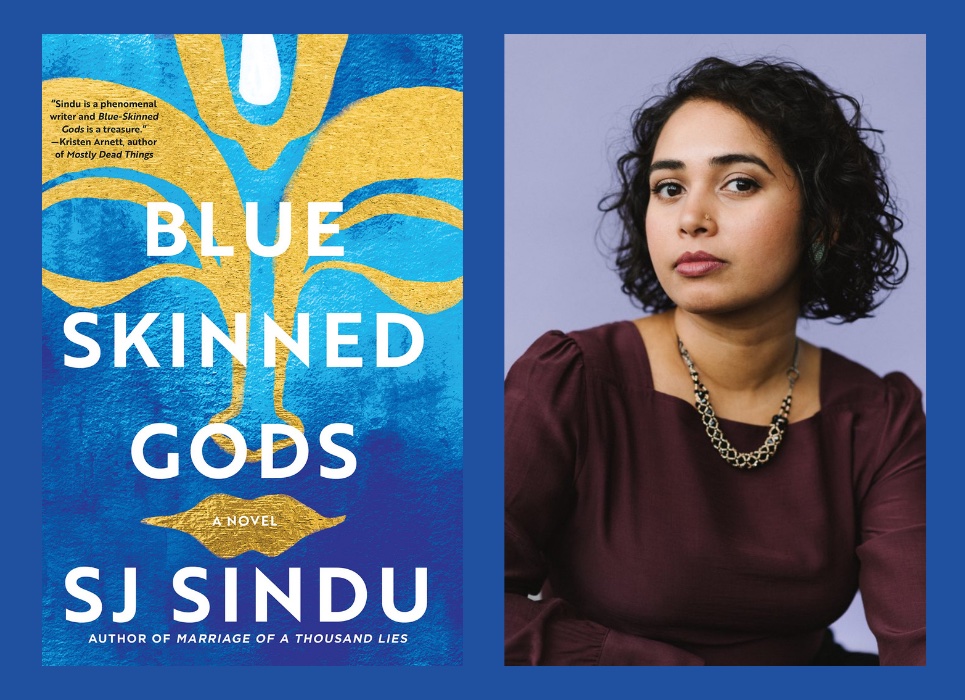
S J Sindu
S J Sindu is an American writer of Sri Lankan decent who has written two literary novels on the Tamil Diaspora namely, ‘Marriage of a Thousand Lies‘ and ‘Blue-Skinned Gods’ ; two hybrid chapter books namely, ‘I Once Met You But You Were Dead’ and ‘Dominant Genes’ as also ‘Shakti’, a middle grade fantasy fiction graphic novel.
She did her Masters in English from University of Nebraska-Lincoln and then went on to get a PhD in Creative Writing from Florida State University. She has won the Turnbuckle Chapbook contest and the Black River Chapbook Competition for her books ‘I Once Met You But You Were Dead’ and ‘Dominant Genes’ respectively. Her book ‘Marriage of a Thousand Lies‘ has won Publishing Triangle Edmund White Award for Debut Fiction, American Library Association Stonewell Honor Book, Lambda Literary Award Finalist, and has also bagged the Silver Medal at the Independent Publisher Book Awards. She now teaches Creative Writing at University of Toronto, Scarborough and lives with her poet partner Geoff Bouvier.
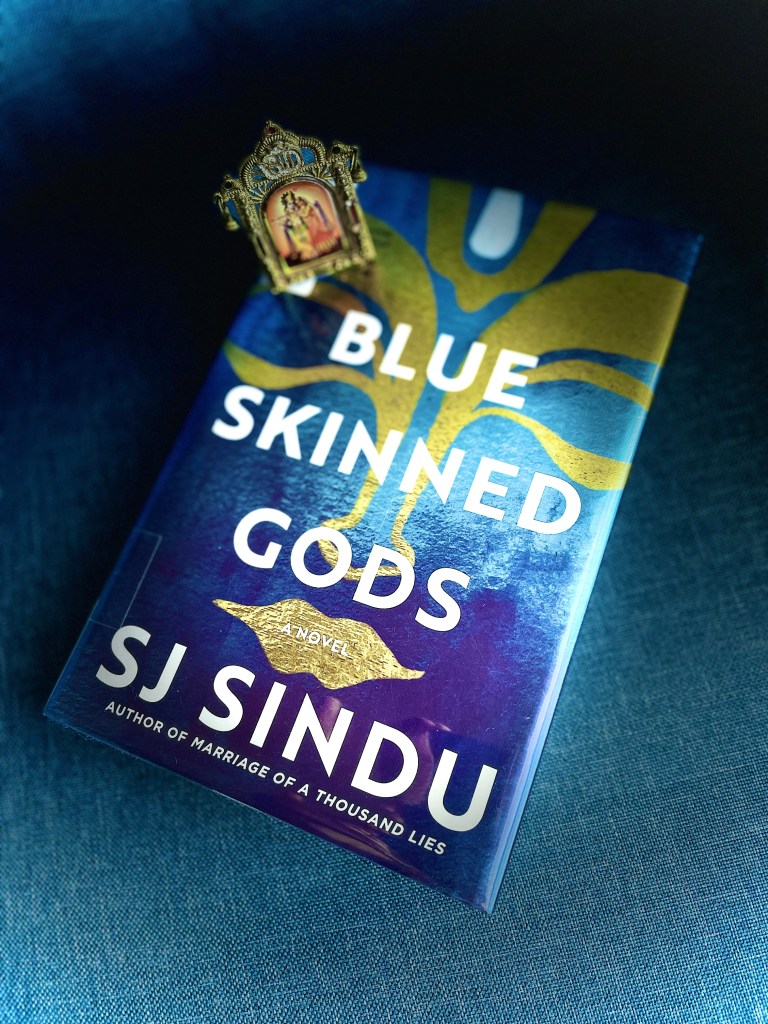
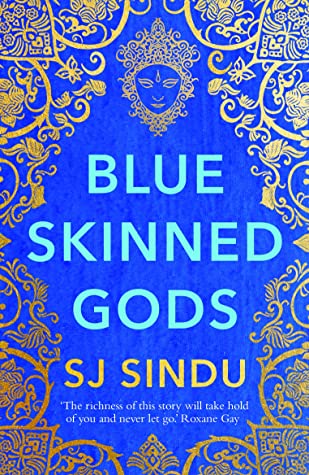
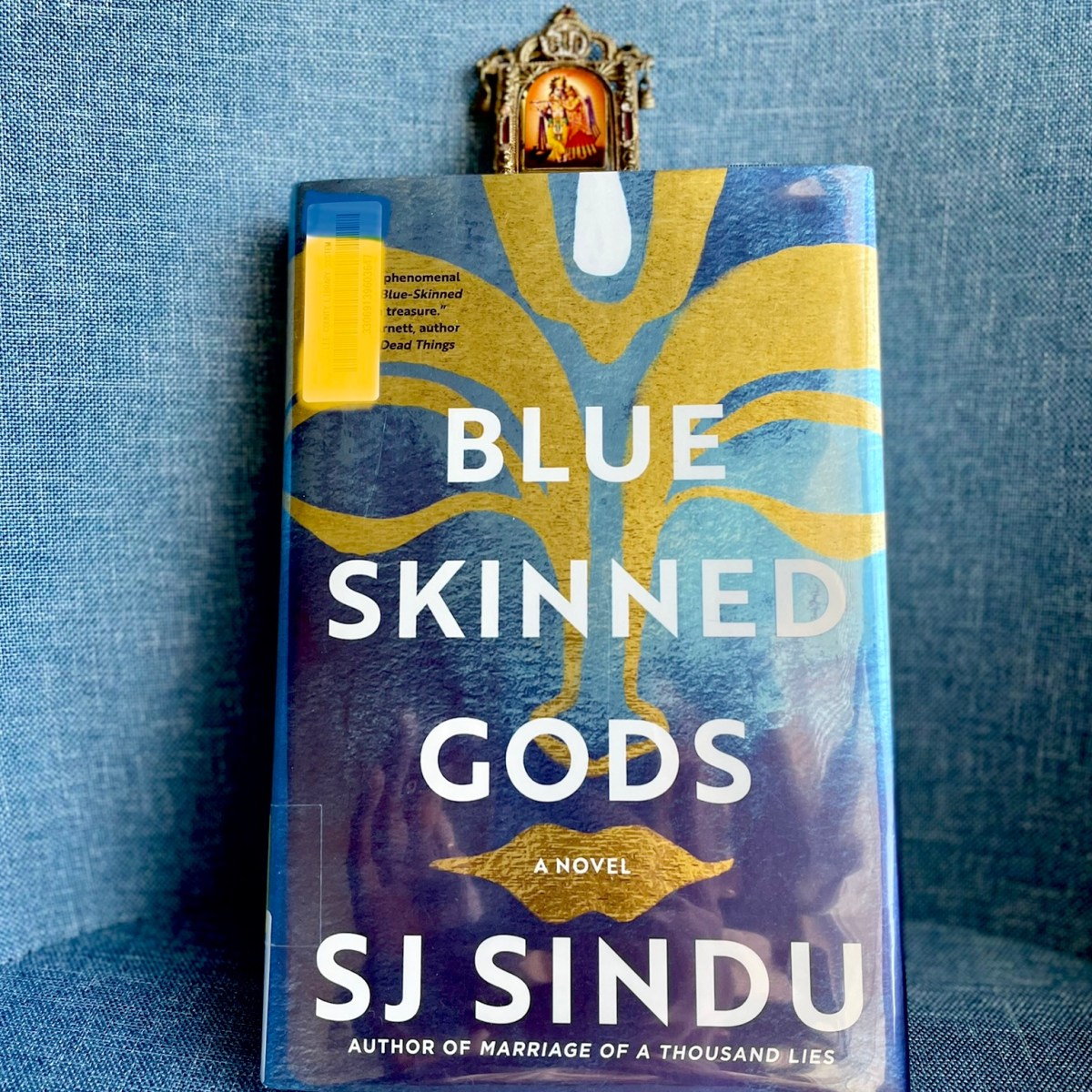
Blue-Skinned Gods
Blue Skinned Gods is a remarkable bildungsroman story of a boy who was born with blue skin and was made to sit on a high pedestal as a God- the 10th and final incarnation of Vishnu, Kalki. It is a profound story of how we are fed information about the world we live in, so much so that we start believing in a world that does not exist, or in this case, the situation that didn’t exist.
My divinity had been as real as flowers, or the sun, or my own skin
This novel has it all, a manipulative father, an oppressed mother, an intense bonding with a brother, tender first love, flying out one day to find a new world-one that he had never imagined, the dogmas, the diversity of cultures, a truth that had a different meaning, punk music, redemption and above all finding an answer to a universal question- Who am I? All his life Kalki believed that he had healing properties, that he was a God. He bore the pressure of consistent performance until one day he did not. Sindu has marvelously charted one boy’s journey from an isolated ashram in the interiors of India to the clubs and night life of New York City.
And when that godhood broke, reality itself had shattered to pieces around me
An excellently written entanglement of a boy born with a medical condition made into a God, this is a compelling and emotionally charged tale.
The biggest takeaway from Blue-Skinned Gods:
The questions, the options and the answers. We have to find them ourselves. It is every individual’s journey and everyone have to find their own path.
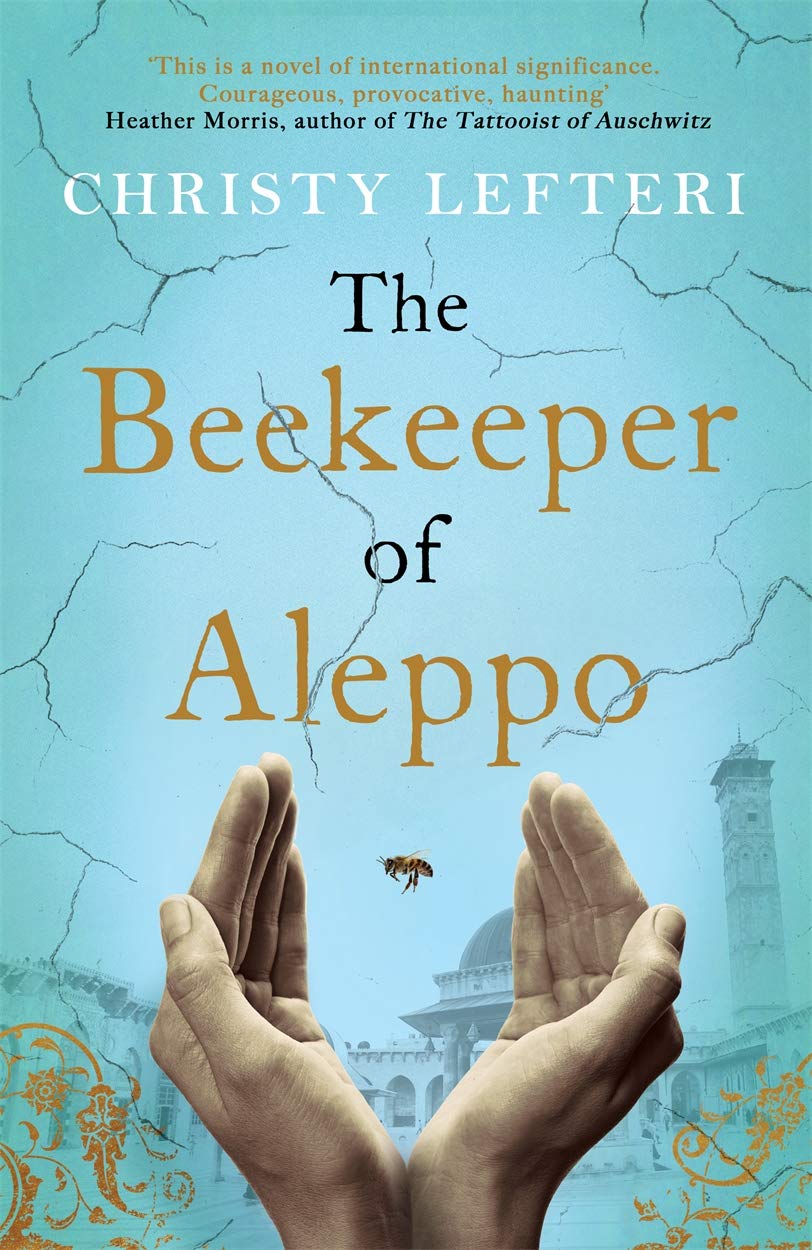
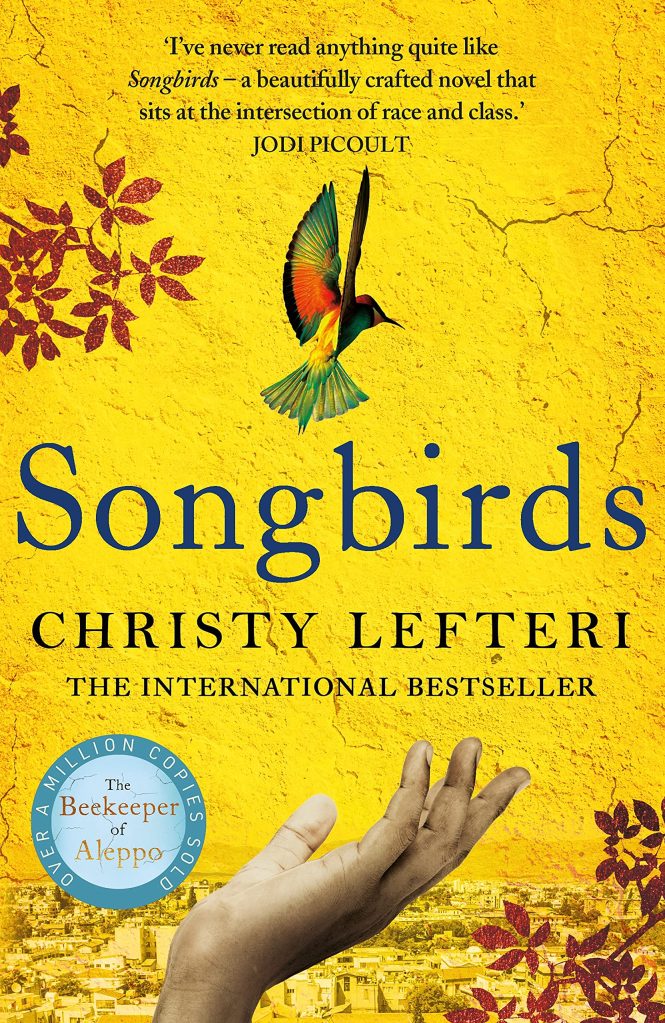
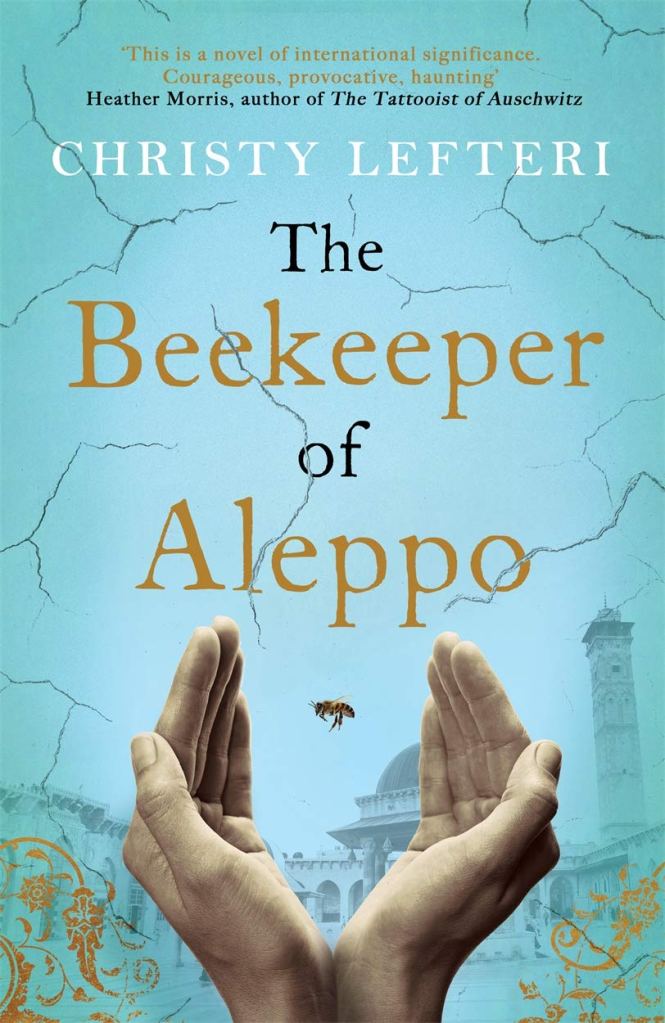
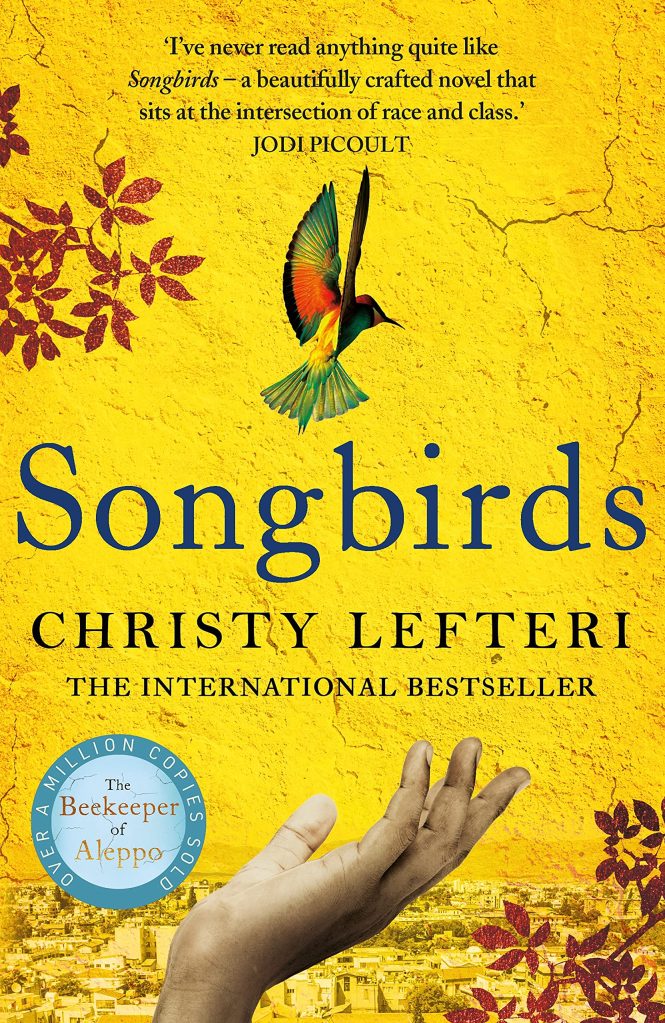
Christi Lefteri was born in 1980 to Greek parents who were refugees from Cypress to London during the 1974 Turkish invasion. She completed her PhD in Creative Writing at Brunel University. She is now a lecturer there. Raised in London, her first novel ‘A Watermelon, a Fish and a Bible’ was released in 2010. ‘The Beekeeper of Aleppo’ was her second book released in 2019 which became a Sunday Times bestseller and the winner of the 2020 Aspen Words Literary Prize and was the runner-up for the Dayton Literary Peace Prize. Songbirds is her latest historical fiction novel released in 2020.
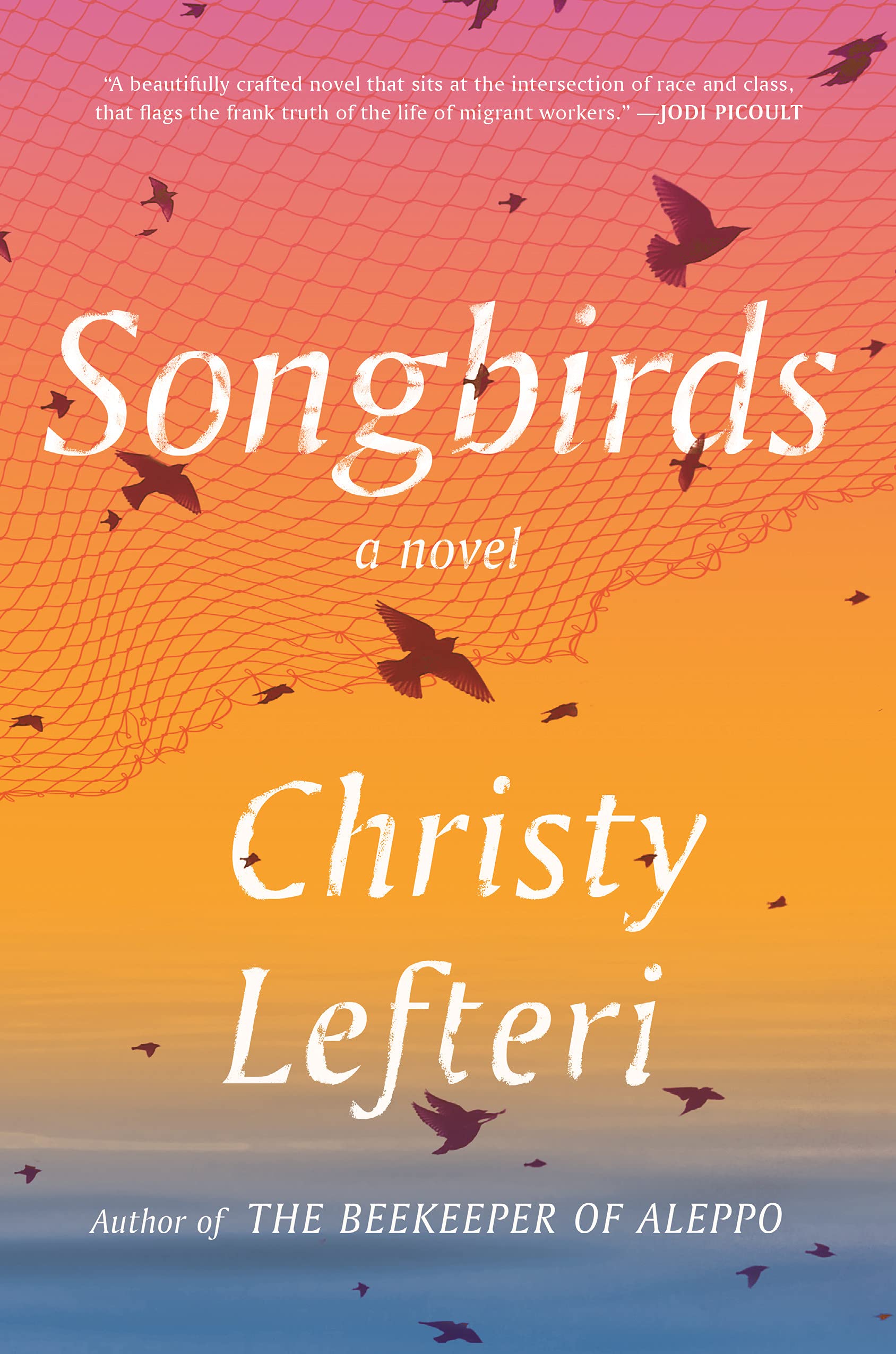
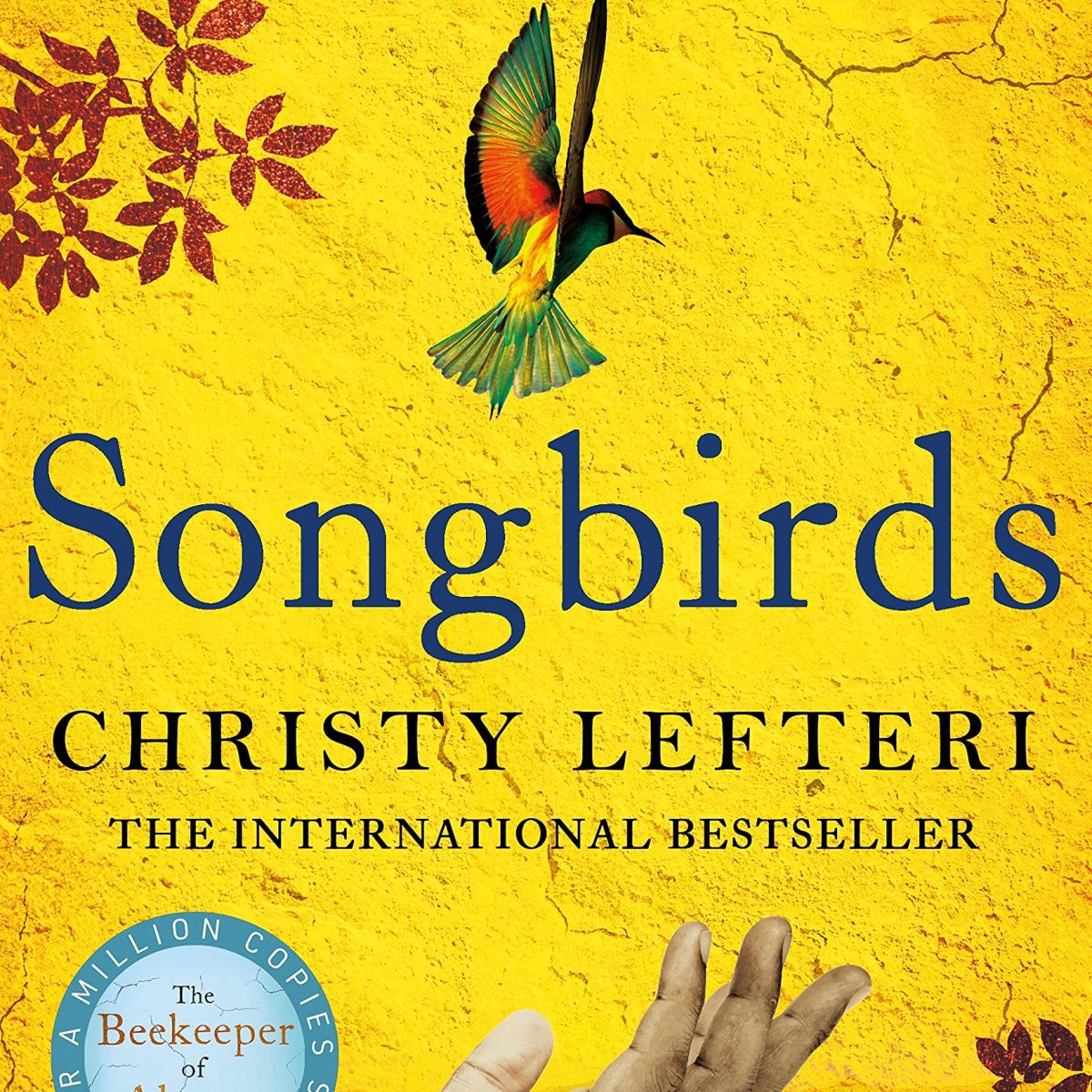
Songbirds
Songbirds is a beautifully crafted novel about the disappearance of Sri Lankan domestic migrant workers in Cypress and how people they are surrounded with show empathy and compassion towards this vulnerable section of their society.
“Yes, I love thinking about beginnings. I don’t like endings, though I suppose I’m like most people in that. An ending can be staring you right in the face without you knowing it.”
Inspired by the real disappearances of domestic workers in Cyprus, this novel has created waves of disturbance through its heavily empathetic and sad story about migrants seeking to earn a living miles away from their families.
Nisha is a Sri Lankan migrant worker in Cyprus who earns by working as a maid to a widow, Petra and her daughter, Aliki. Though she has crossed oceans to earn a decent living by providing care for Petra and Aliki, she longs for her own daughter who she left behind to be cared by her relatives.
The title Songbirds comes from the part that Yiannis plays in the story. He is a small time poacher of Songbirds who migrate from Africa to Europe every year and who also wishes to leave this job for he wants to marry Nisha. Nisha wants him to quit this job but he is entangled in a web of people who could kill him if he did.
“You see, we have to eat, and we have to survive, and yet we must protect our dignity and our identity. There are things we do to achieve those things. But we can respect the land and the animals that are on it. Always be kind to the land, the people, and the animals that are on it. Remember that. It’s the most important rule in the world.”
One night, Nisha disappears without a trace. Petra who had a good relationship with her maid started her investigation which led her to other migrant workers. There she came to know that there have been more such disappearances. Digging deeper, Petra started becoming aware of the vulnerable lives of these migrant workers who come miles away from their own home to earn a decent living for the families they have left behind. Though Petra and Yiannis try to notify the authorities, it was evident that they were not interested in runaway migrant workers as if they did not exist.
The poignant way this novel is written and the depth of the descriptions given throughout are what makes this book a bestseller. Nisha’s disappearance, Petra’s confusion, Yiannis’s longingness, Nisha’s daughter’s hopes, the cruel deceiving of the songbirds and the brutality of the situation renders the reader with a heavy heart and a damaged soul. Yet, the author instills hope. The distinct narrative and vivid descriptions make it a beautiful story with a very deep message.
“After the war, I learned a lesson I would never forget: how a person can disappear inside themselves, and that, sometimes, like my father, they are never able to find their way back.”
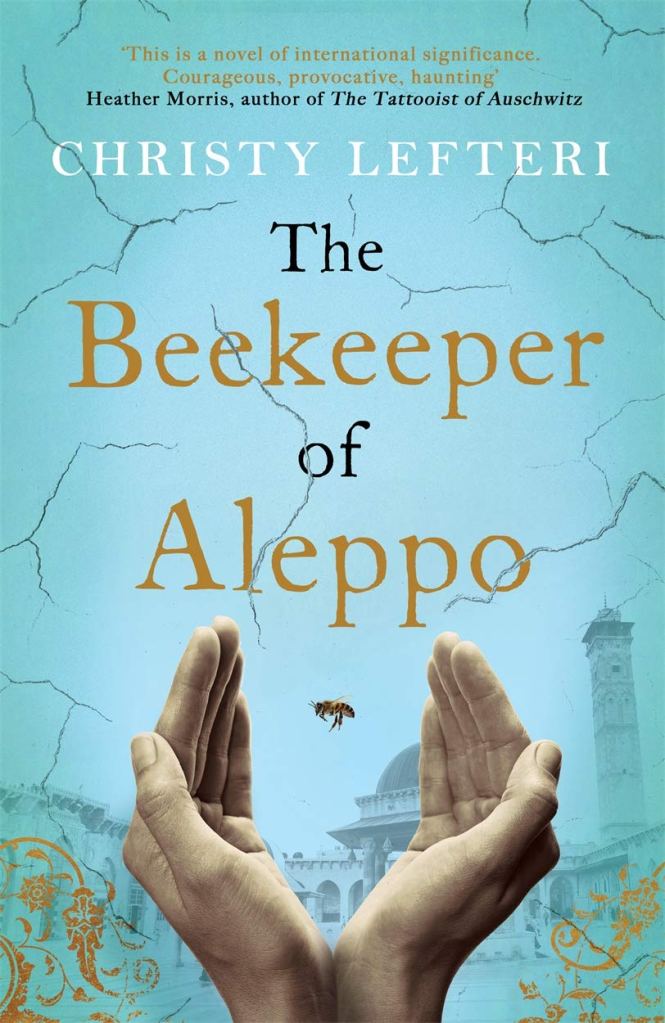
The Beekeeper of Aleppo
“Where there are bees there are flowers, and wherever there are flowers there is new life and hope.”
Christy Lefteri’s powerful and relevant novel, ‘The Beekeeper of Aleppo’ is an eye opener of the lives of displaced people in a war torn world. The story of a Syrian couple who had to flee their home in Aleppo indefinitely as the civil war razed their home to the ground is absolutely horrifying.
“The bees were an ideal society, a small paradise among chaos. But in Syria there is a saying: inside the person you know, there is a person you do not know. How she realized that we are less human in our times of greatest love and greatest fear. Sometimes we create such powerful illusions, so that we do not get lost in the darkness.”
The story revolves around Nuri, a beekeeper in Aleppo and his wife, Afra who lost her eyesight after their son got killed in an air raid. Leaving his bees behind was one of the most painful things for Nuri, yet he had one injured bee with him. It was more hope than the bee that he had with him by his side, a hope to live, a hope that he may be able to go back to his bees, a hope that his wife can see again and a hopeless hope that his son can come back from where he lay. The novel is brilliantly written, going forwards and backwards in time and emotions. The line between reality and PTSD hallucinations that Nuri was affected with is sometimes very very thin and the reader has absolutely no clue as to what is the truth and what is Nuri’s truth. They had lots of money to get a pass through to England, hopping at places they had not planned for but then, they hadn’t planned for any of this. Even with the money, the right kind of resources and availability made them feel poor, mainly because they were not able to make decisions of their choice and were practically dependent on so many different factors.
“People are not like bees. We do not work together, we have no real sense of a greater good ”
This is a well crafted and well structured novel and Christy perfectly portrays the once strong Nuri gradually succumbing to his inner wounds. The book doesn’t mention much politics of the situation, but gives an in depth feel of the perilous journey that many displaced victims of war had to take. The author narrates the plight of the refugees seeking asylum who after taking long and unbearable wanderings are refused entry at the borders and then they have to try other resources which may or may not be present at that time, their stash of money being rendered useless until some smuggler comes to their aid. All this is extremely painful to read. Humans treating humans absolutely inhumanly is the cost of war that innocent people have to pay to just keep living.
“I will never forget the silence, that deep, never-ending silence. Without the clouds of bees above the field, we were faced with a stillness of light and sky. In that moment, as I stood at the edge of the field where the sun was slanting across the ruined hives, I had a feeling of emptiness, a quiet nothingness that entered me every time I inhaled.”
The novel shows the power of hope in the form of a wingless bee far from her hive, just like Nuri, far from his home and his bees, yet compelled to live, and somehow reach Mustafa in Britain.
“Yuanfen, a mysterious force that causes two lives to cross paths in a meaningful way.”
The best takes from this novel to name a few are the neat parallel between Afra’s blindness and Nuri’s hallucinations, the jumping from reality to fiction in a sentence, the simultaneous presence of trauma and hope all through the story.
One of the best historical fictions I have read.
“They communicated without words from the most primitive part of the soul. I remembered her laughing about this, saying that she felt like an animal, and how she realized that we are less human in our times of greatest love and greatest fear.”
A comparison between Songbirds and The Beekeeper of Aleppo
Both the novels, namely ‘Songbirds’ and ‘The Beekeeper of Aleppo’ are extremely well written, emotionally draining and hope driven. The world is a beautiful place where people make bad decisions and the repercussions are borne by the innocent. The stories in both these narratives show a behind the scenes act of displaced people, for different reasons, in different worlds but the same pain. Christy Lefteri is a remarkable writer who knows her way with the words. She can make a horrifying and an emotional statement go hand in hand. In either of the novels, she states the unheard problems of the migrants, their daily lives and the dangers that they have to bear on their shoulders, the depleting hope from their lives. Yet, Christy artistically proclaims hope to be the final winner. A hope, an anticipation of a better world by witnessing the wounds of the characters in her novels is what I call a master art and Christy a master artist.
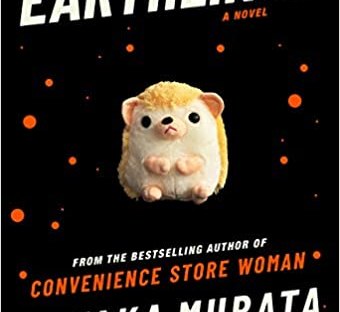
Alert: Do not let the cute hedgehog on the cover page of this book fool you. It is only to make the attack much more vicious towards the end of the story. It isn’t a cute novel from the perspective of an 11 year old as it may look. This book HAS content. Child abuse, physical abuse, sexual abuse, emotional abuse, misogyny, incest, isolation, hikikomori (acute social withdrawal), society seclusion, murder, and to top it all up cannibalism. This book is down right shocking, gripping and outrageous. This dark fantasy fairy tale is just so vicious, it makes your heart go for a toss.
Having got that out of my system I would like to add that this book is brilliantly written in a way that it surreally blends childish innocence and society taboos towards the urge to survive and not give in. The narration is remarkably emotionless which is a good thing given the plot. The way the author gently crosses the line between reality and augmented reality created by the protagonist is very cleverly done. The characters are unique, and I liked some concepts like ‘the factory’ and the planet name ‘Popinpobopia’, the annual family get togethers and the festivals.
I do understand how much effort it takes to write a book, to put all the hustle going inside the head to stretch it out on paper, to be so bold in your writing, to live in the pressure to awe the readers. I truly do appreciate what authors do for us. But once in a while, some authors with very different and pressuring views kind of hit the face both in a good and a bad way. Sayaka Murata is one such author to hit it smack right in the middle of the forehead. The climax of the novel just crossed out all the will to finish it to the end. I did not see that coming at all. But with so many different angles and concepts in this story, another one shouldn’t have made any difference. But it did. Big time.
This is the first book that I have read by this author. I would like to read more mainly to bring her in to my ‘good books’, quite literally. This novel for me is a big ‘Nada’… I am so sorry for saying this and I think this is the first time ever I hold this opinion for any book or author. My apologies.
First Published as: Hedy’s War in the UK in 2020, The Viennese Girl in Australia and as Hedy in Argentina.
This edition: Published in 2021, in North America by arrangement with Harlequin Books S.A. I received the uncorrected Proof not for sale by Harlequin Books in return for an honest review through goodreads.
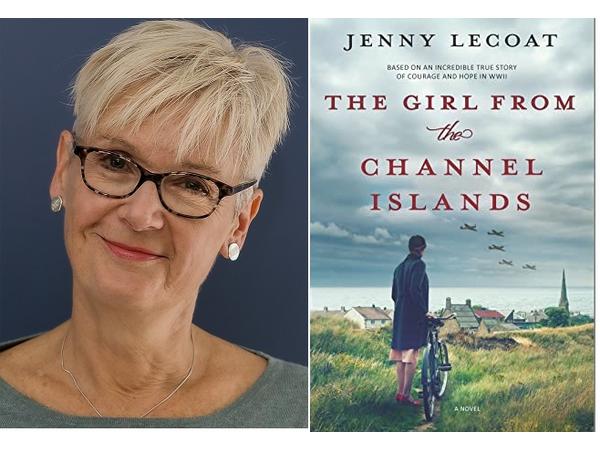
Jenny Lecoat
Picture Credit: Blog Talk Radio
Jenny Lecoat was born fifteen years post world War II in Jersey, Channel Islands. The islands were a mere few miles away from the french coast in the British territory which was under Nazi Occupation. Lecoat was brought up in a war ravaged city unaware of the traumas of its past where her family on both sides had been extremely involved in the resistance activity. She was interested in story writing from an early age and moved to England at the age of 18 to take a drama degree. She did standup comedy and wrote magazines and newspaper articles, presented tv and radio shows before taking screenwriting seriously. She is a qualified teacher of English as a Foreign language. This is Lecoat’s first novel.
The Girl from the Channel Islands
This novel has been inspired by true events of World War II over the island of Jersey of the famous Channel Islands. It was the summer of 1940 when Hedy Bercu, a young Jewish girl who had fled Vienna, Austria to escape the Nazis had come to Jersey. Little did she know the complications of politics when the Germans decided to invade the beautiful Channel Islands, the only part of Britain that the Germans occupied and Churchill conveniently abandoned. Hedy confronted the hostile forces both in her homeland and her place of work. Her boon was her command over both English and German languages because of which she could sustain the job of a translator with the enemy for a while. Working for the enemy wasn’t easy just as she had predicted but it gave her liberty to perform some personal acts of resistance in which a German officer with love in his heart was her aide. It wasn’t long before the Germans caught her sense and became hungry for her blood. Trying to simply stay alive she ran, hid and stayed low with the help of Kurt, her German lover and her best friend Anton’s wife Dorothea Le Brocq. Together they made her invisible covering her tracks, lying to the public, watching out for the German hounds. The fear of being caught on account of her ethnicity or for her little acts of resistance kept her shivering all the while, not mentioning the meagre food she had access to.
My Take
WWII novels mostly make me nauseous just as this one did. Something that distinguishes The Girl from the Channel Islands is that it provides with a fresh perspective to courage, bravery and above all hope of survival in the brutalized people when everything was lost to them. Hedy’s pure grit and zeal to never give up is what kept her going when so much was going on around her that there were times when she wasn’t sure she would see daylight again. The story has a dramatic tension about it even though there is not much resistance or war crime portrayed. This is about the psychological pressure that the people of Jersey were in gradually being deprived of everything that they needed to survive while Churchill was keeping a blind eye to it. The five years that the German’s were in control, the people of Jersey were left to basic survival. There was no food, no aid, no help and nothing was in sight too that they could hang on to any hope. Another aspect is the romance that blossomed between Hedy and Kurt amidst all the chaos and running which is such a human win given the conditions. The emotional turmoil, the difference of ethnicity, the heartbreaks, the emotional conflicts and the reunions between them are quite goofy yet melancholic at times.
There have been bursts of rage and puddles of tears while I read this book. Books like these are like a reality check where we are hit hard in the head comprehending how granted we take life to be that it moves and turns at our beck and call but so much depends on fate, on when and where we are, on who we are. Fighting the enemy all the while hiding from them, running of fear of discovery, racing against time to evade being sent to a concentration camp is all so nightmarish and yet it was someones truth and someones today with all lost hope of tomorrow. My heart goes out to the horrifying reality of those who witnessed one of the bloodiest eras in human history.
The authors connection to the setting of the novel and her family’s history in which some of her relatives may have been summoned for the macabre consequences of that time would have given her the motivation to write this historical fiction narrative. I have read a few WWII books which are based in Germany, Poland, Slovakia, France and other places. Jersey was the only British Island occupied by the Nazi and I had recently read The Gurnsey Literary and Potato Peel Pie Society a novel written by Annie Barrows and Mary Ann Shaffer which made me interested in this narrative. The in depth research by the author coupled with the history she had access to has defined the novel and given a voice to the people of Jersey who were an insignificant minor in the global conflict.
The Girl from the Channel Islands is a wonderfully written Historical Fiction novel which keeps you on the edge and tickles you with tears and foreboding throughout. Hedy’s contributions for her people in all the adversities that she could think of is a tale of resilience, bravery and love in circumstances of impossible proportions. I could feel Hedy’s fears, her grit, her perseverence and zeal to live all the while my head was in the book and even after that, such strong is the writing by Jenny Lecoat. It is a tale of heroes from the past who may never be known to us, hence novels like this. It is a brilliantly written story which compels you to think what ethical boundaries would you be willing to cross to keep bay the moral qualms in the name of survival.
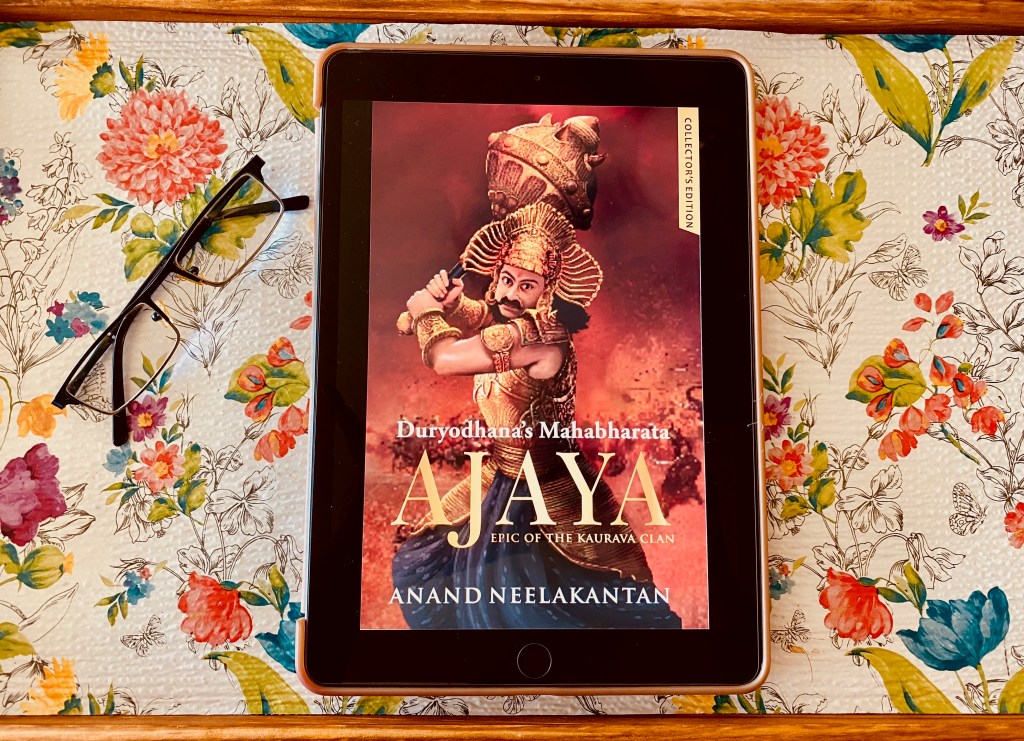
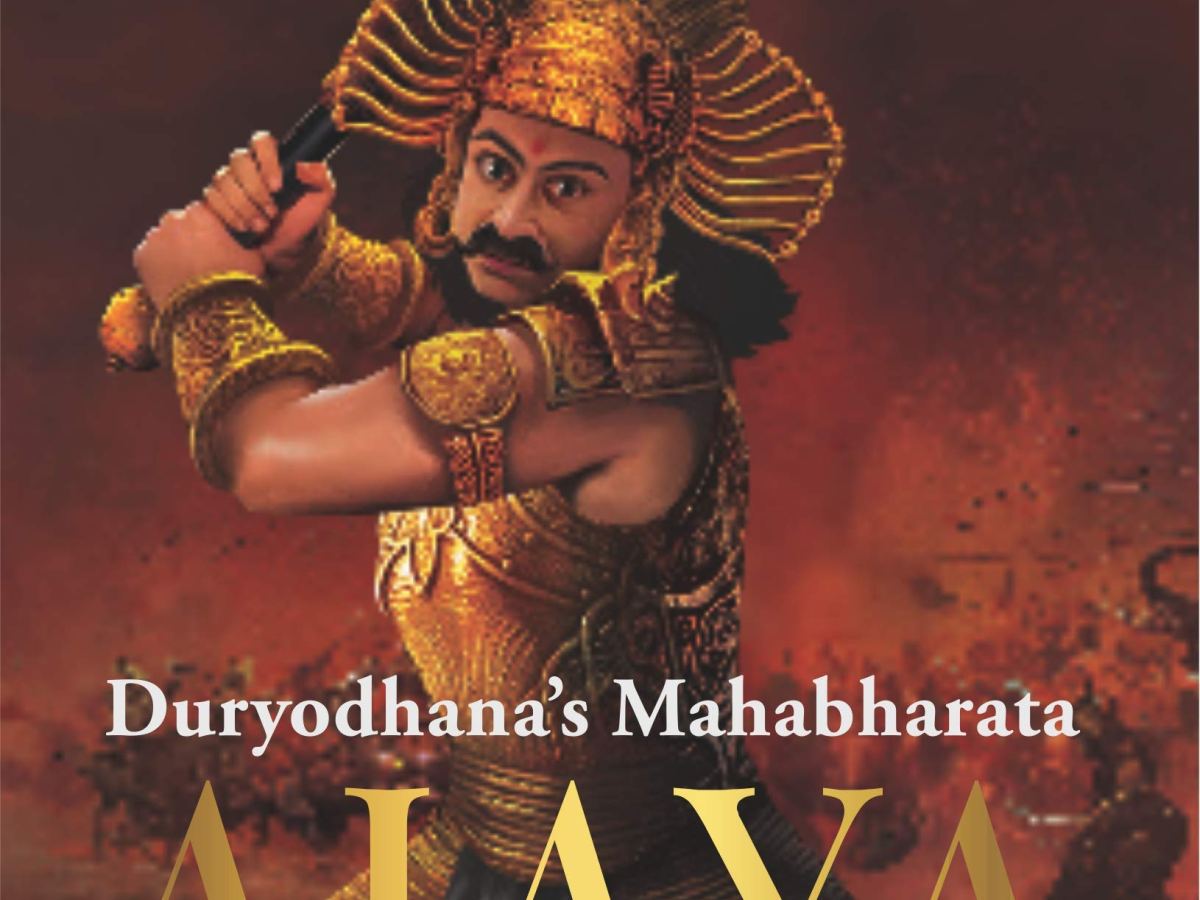
Title: Duryodhan’s Mahabharata AJAYA – Epic of the Kaurava Clan
Author: Anand Neelakantan
Genre: Historical Fiction, Mythical Fiction, Alternate History, High Fantasy
Book 1: Roll of Dice
Book 2: Rise of Kali
Original Language: English
With the aid of Universal Consciousness, the Virtues triumph over Desires.
AJAYA: Duryodhan’s Mahabharata, Epic of the Kaurava clan is a two book narrative (namely, ‘The Roll of Dice’ and ‘Rise of Kali’) of the Epic Mahabharata written by Anand Neelakantan who is famous for his book ‘Asura’.
There are always two sides of a coin, two versions of a story, two perceptions of a war. The war of Mahabharata was the war over dharma, the war over who is just and who is not, the war over what is right and what is wrong. We have always read (the books) or heard (the stories) or even watched (the tv series and movies) of the Mahabharata saga and they all point towards the winners of the war; the Pandavas as against the Kauravas. While Jaya is the story from the vantage point of the victorious Pandavas, Ajaya is the tale of the vanquished Kauravas who were said to be unconquerable and yet they were destroyed completely. It is a provocative perception to a conventional saga.
DHARMA
Is dharma a war fought without ethics and then glorified?
Because that is what happened in Mahabharata. The two parties became parties only after breaking up as a family. A war fought among family in itself is adharma in my opinion. A crime as heinous as this war had revered witnesses like the Grand Regent Pitamah Bhishma, Acharya Drona, Acharya Kripa, Vidur, Acharya Carvaka, the King Dhritarashtra, the Queen Gandhari, the dowager Kunti and above all Lord Krishna. How did they even land in a situation as that of the war, the biggest, gruesome and goriest of clashes at that?
What is dharma?
For Krishna, dharma is the call of duty.
For Drona, it was putra-moh, love for his son.
For Karna, it was his friend not his mother and brothers.
For Yudhishtir, it was to follow the path of his ancestors and to speak the truth.
For Kunti, it was maternal love.
For Suyodhana, it was his loyalty to friendship and Swadharm or following the heart.
For Balrama the pacifist, ahimsa or non violence was dharma and so he didn’t participate in the greatest war ever fought and took refuge in the jungles instead.
Even though Yudhishtir was officially dharma-putra, he had questions on what each persons dharma was. Bhishma’s explanation to him was that only Yama or time can decide what or what not is dharma.
According to Sage Narada, the three Vedas namely, Rig, Sam, Yajur are the cornerstones of dharma while Bhishma declares dharma as the root of Vedas. If that is to be held true then dharma is no constant. It is dynamic and keeps changing over time depending on the need of the hour. Krishna agrees to this yet he also says that the final authority lies with the scriptures. Krishna on the other hand advises that Nishkama karma or acts of devotion can be dharma.
No one can decide what is dharma and what is not dharma, who is the victor, and who is the vanquished. Mortals are but tiny specks in the vast universe, blips in the great ocean of time.
Does winning the Mahabharata war actually have deemed them to be ‘right’, since it was a war of dharma, even though they used unrighteous techniques and didn’t follow the rules of war? Does victory mean justice?
Why is Kurukshetra considered to be the dharamkshetra? Was it because it was a place where two definitions of dharma were in conflict and the certainty that winner takes it all?
Was burning Khandiva to the ground and so many of the residents killed or rendered homeless Pandava’s dharma?
Was looting cities and women after wars anyones dharma?
Was forceful marriage of Gandhari to a blind man after she was abducted and her family killed, her kingdom ruined dharma on Bhishma’s part?
The killing of sleeping children by Ashwathama (who by the way was a brahmin) in any decent way of the world dharma?
This debate is endless.
There are no victors or vanquished, just people and their lives.
In todays world, the line between dharma and adharma is very blurred, more often than not it is given the shape of blind devotion. Which was once speculative philosophy pivoted into absolute thoughts of good and evil.
Every argument has consequences, every fight has consequences, every war has consequences in multiple folds. No war has winners or losers, though there may be winning and losing parties. Everyone loses in a war in some way or the other. Its the men who lose their lives and their limbs, children who lose their fathers and brothers, wives who lose their husbands, families who lose everything in a war. So then who is the winner? Is it that one person who gets the high seat? Is it worth it? I wonder.
Ajaya: Duryodhan’s Mahabharata has opened my eyes and given me a new perspective to this age old epic which has never failed to glorify the Pandavas and defame the Kauravas. Suyodhan’s version of Mahabharata is very interesting and at the same time quite thought provoking.
Ananad Neelakantahan is a master at traditional mythology and the way he narrates the saga from an ‘anti-standpoint’ is thrilling. He throughout the narrative seamlessly enthralls and keeps the reader on edge by leaving little cliffhangers to mystify their imaginations. The writing is great. The style is very convincing. The character building is super strong. The narration powerfully gripping. The language is thoroughly understandable while keeping the vocabulary of common readers in mind.
The book very flatly speaking is pro Kauravas and anti Pandavas. The author has conveniently highlighted the Pandavas’ wrong doings and omitted some of Kauravas’. The text gets too pushy when it comes to glorifying Kauravas and too light when it is clearly evident that they may be at fault. All participants in the war had their own stories and personal grey areas but Neelekantan has taken the torch to highlight Suyodhan and how he may have been manipulated into the war given his stubborn and trusting nature.
Long story short, I feel the author has been biased in his writing but then wasn’t that the aim? To paint a picture from Suyodhan’s point of view? And might I say he nailed it!
“It’s a well known fact that people who live in times of peace have no idea about war.”
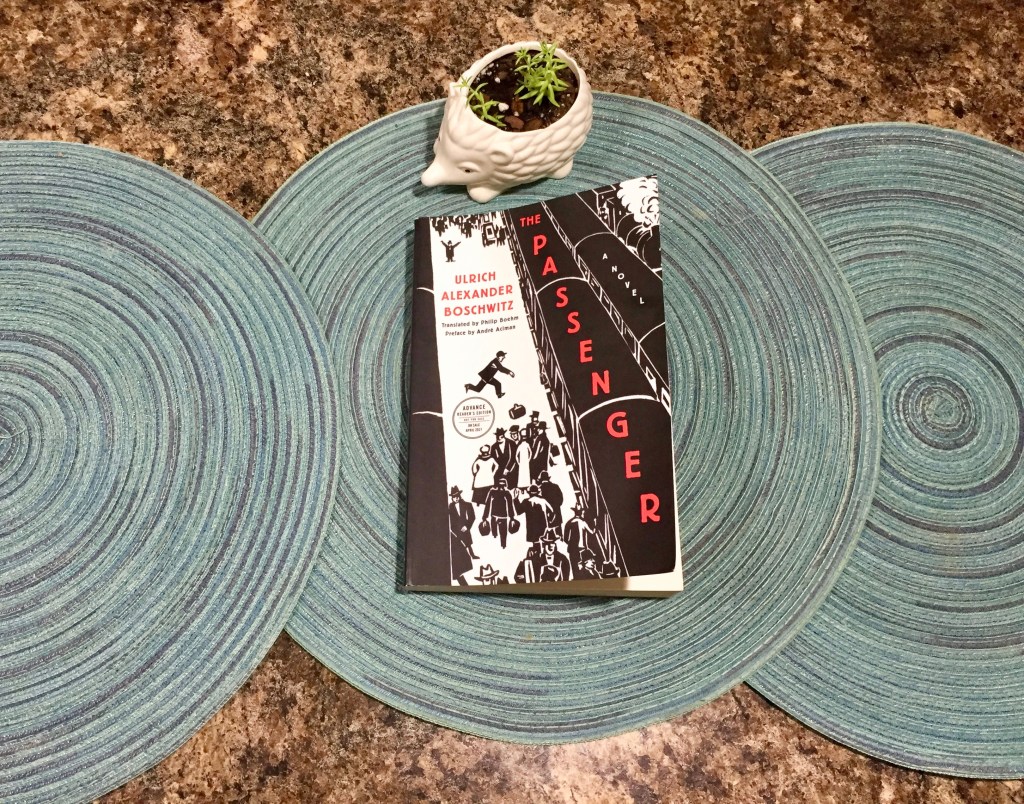
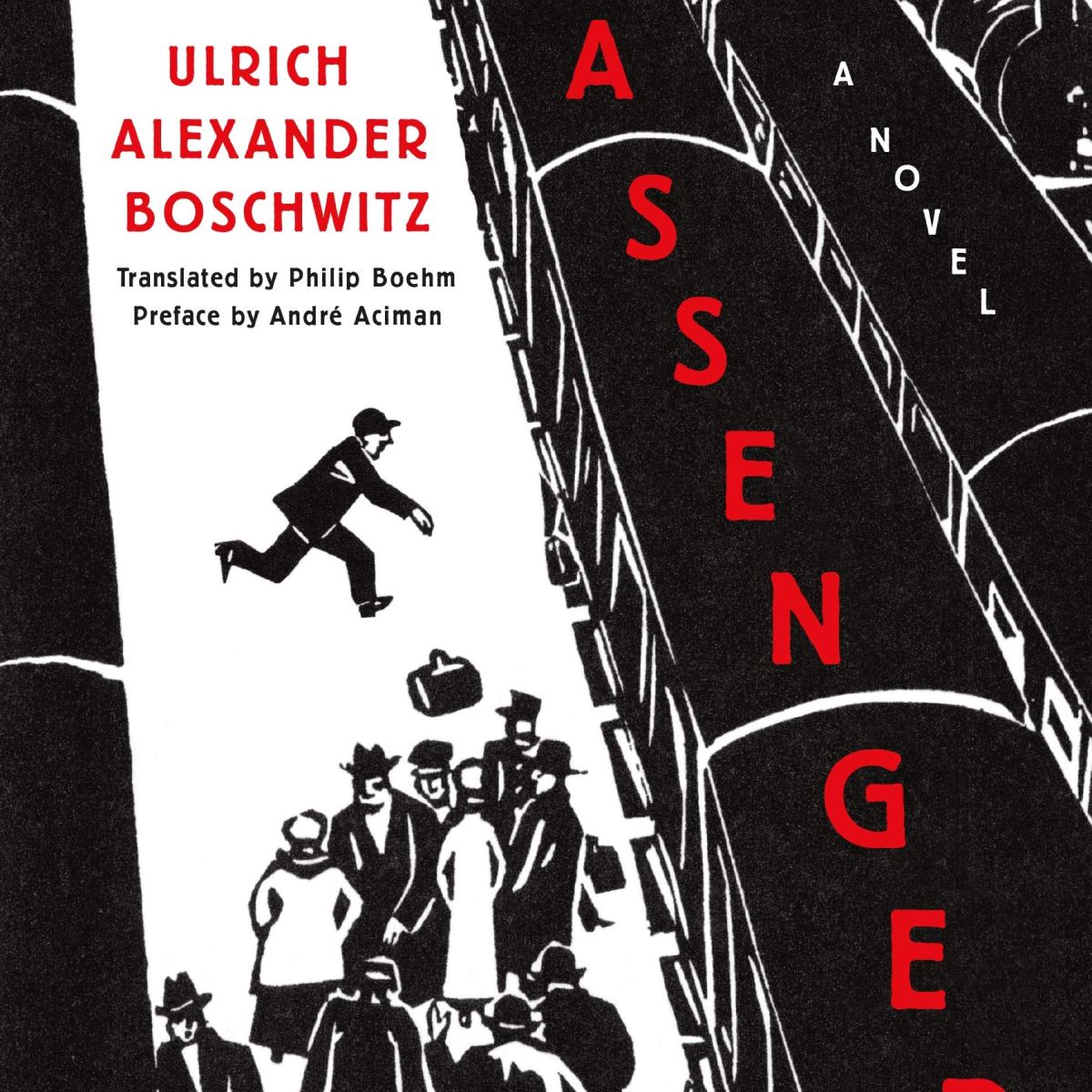
Thank you Goodreads and Metropolitan Books for sending me this Advance Reader’s Edition of The Passenger by Ulrich Alexander Boschwitz. I am a historical fiction fan and when I won this book on Goodreads giveaway, my happiness went bouncing. What caught my attention immediately was that the original manuscript of this book had been long lost and recently been uncovered. This made me curious about the book and the author. I did some research in the matter and this is what I found:
About the Author:
Ulrich Alexander Boschwitz, the Guardian
Boschwitz (1915-1942) was a young man when he conceived this book. Born of an originally Jewish father (later converted to christianity) and a Protestant mother, Ulrich escaped to Sweden in 1935 following the promulgation of Nuremberg Laws. Later he moved to Paris, then Luxembourg and then Belgium. In 1939, shortly before the outbreak of World War Two, he joined his mother in England where he wrote the first draft of The Passenger. He was able to publish an early version of the novel in both England and France but it went pretty much unnoticed. Boschwitz was then sent to New South Wales, Australia aboard the HMT Dunera as an “enemy alien” along with other refugees from Germany and Austria where he spent two years in internment camp. Later in 1942, after the attack on Pearl Harbor in Hawaii, he was reclassified as “friendly alien” and was then freed. He boarded the troopship MV Abosso bound for England, which was torpedoed by German U-boats and unfortunately Ulrich Alexander Boschwitz perished along with 361 of his fellow passengers.
The Story of the Book:
“There was a risk that the story of this book might overwhelm the story in the book – its origin tale is quite something.” – theguardian.com
I agree. Both the novel and the story behind it are very intriguing.
The year was 1939 when Boschwitz first conceptualized this book. The events of Kristallnacht (Night of Broken Glass or the November Pogroms, when the Nazi Germans attacked Jewish persons and property) had affected him quite deeply. And so he wrote The Passenger in just four weeks. In his last letter to his mother in England, he wrote that he sent the first 109 pages of his reworked manuscript with a fellow prisoner on his way to England. Sadly there has been no knowledge of it being received.
It so happened that Boschwitz’s niece read an interview of editor Peter Graf about another novel that he had rediscovered. She contacted him and told him about Ulrich’s original German transcript and that it is sitting idle in the National Library of Frankfurt for over 70 years. The German publisher and editor Peter Graf connected with Boschwitz’s mother and eventually revised the rediscovered transcript. The novel reappeared in its revised form in its original language in 2018 with the title Der Reisende. It is now translated in 20 other languages including English. This translated copy by Philip Boehm is of the revised original version.
The Novel:
The year 1938, right before World War Two. It was like a heavy raincloud gradually moving over the Jews living in Germany. They knew it was a matter of time when the clouds will blast their fury. Most ran away to safer places, some left with everything, some with nothing, some didn’t at all thinking that things might just get better. Well, things didn’t get better. They just worsened and worsened for that community. Those who chose to stay were trapped, quite literally for Germany wasn’t letting them leave anymore and other countries didn’t want them in. Last they checked, Germany was still a democracy. It was unimaginable. And yet to everyone’s horror, it happened.
The story of Otto Silbermann came about after The Night of Broken Glass (November 9 – 10), when Nazis torched Synagogues, vandalized Jewish homes, terrorized and ransacked schools, property, businesses, cemeteries, hospitals everything. They killed over a 100 Jews, tortured them and arrested close to 30,000 Jewish men to be sent to concentration camps that one night. 60 million European Jews were systematically murdered during what was known as the Holocaust, Hitler’s “Final Solution” to the “Jewish Problem”.
Otto Silbermann, a very well doing, rich, Aryan-looking Jew had to flee from his home in Berlin leaving his belongings, business, and his Christian wife behind. A dutiful, tax paying, respected businessman and an upright citizen who was also at the front of The Great War had to flee like a petty criminal. What he did have was 40,000 Marks. His biggest mistake: he didn’t leave when he could and now he couldn’t even if he wished. Now all he could do was run.
“”Aren’t you at all afraid?” Lilienfeld defended himself. “I am. Of course. But I refuse to give in to my fear!” said Silbermann, nicely and firmly.”
What are the conditions that a person has to run even though he has everything in life? Yes, right….run for his life.
But what help would money do when you are on the run? He couldn’t go to a restaurant to eat for the fear of being spotted, he couldn’t rent a room, a hotel or anything. All he could do was sit in a train. Just leave…but to where? He travelled from one train to the other. From Berlin to Hamburg, back to Berlin, to Dortmund, to Aachen, back to Dortmund, to Küstrin, to Dresden and finally back to Berlin. All the while hiding his Jewish identity and clenching his briefcase full of money to his chest with all his might hoping that his Aryan nose will somehow save him.
“He stopped in front of a hotel and considered going inside. No, he thought, that won’t work! I can’t weaken, not when I’m this close to the goal, because not only am I trying to escape, I’m also running a race again despair.”
The beauty of this novel is that it is in its finest and purest form. Boschwitz gives us a taste of the Nazi Germany and the plight of Jews as it was happening around him. It is a peek into the sociology of the time just before the world war and the psychology of the predator and prey alike. Just like Silbermann, the protagonist of his novel, Boschwitz has had a desperate itinerary, moving from one place to the other and finally perishing on his journey to freedom. The terror in which the country was is utterly shameful. the social and economic status of Otto Silbermann could also not save him from his peril. That was the end of humanity as far as he was concerned. The novel beautifully portrays a man and a country totally on the loose, totally out of control, totally hapless. Absolutely prophetic, this book gives us but a glimpse into how humanity was being overturned. The loss is irreparable. The book is a masterpiece.
Genre: Animals, Religious aspects-Christianity, Human-animal relationships, Donkeys, Self-Help
Original Language: English
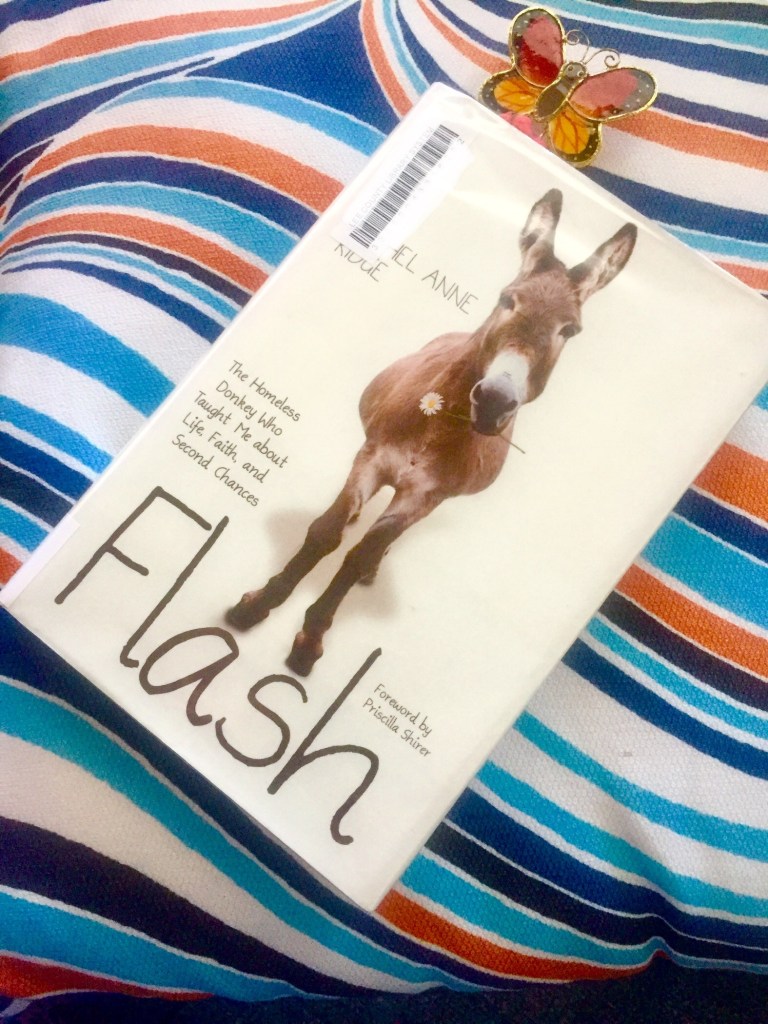
Flash- The Homeless Donkey Who Taught Me about Life, Faith, and Second Chances is the story of a cute donkey and his adopted family.
This is a true story in the words of Rachel Anne Ridge who gave the donkey she found on the road a name, a shelter and a loving family. In return, the donkey gave her insights into her day to day being and life lessons all the while being well! a donkey and Hee-Hawing whenever he felt like it.
As soon as I picked the book randomly at the local library, I got an urge to take this donkey home and explore how exactly does a donkey (who I assumed wouldn’t know English as it is a true story) give faith and life lessons to a woman (who I assumed again wouldn’t understand donkey language as it is a true story.)Well! I wasn’t disappointed. Flash did bring flashes of smile on my face while I dug into this book.
The Forward written by Priscilla Shirer, who happens to be Rachel’s friend and an admirer of Flash caught me by surprise. I immediately liked the book even before starting it. I’ll quote her here:
“Good books are like good friends- difficult to find. Many can look promising at the beginning, only to disappoint somewhere down the line. Even when a book is recommended by a person you trust, you can never be sure you’ll experience the same connection, that the two of you will hit it off.
Yet sometimes-often for reasons you can’t quite put a finger on-you choose to open it up, and open yourself up to it. And every now and then, you’re surprised and thankful at the warmth, the joy, the excitement and pleasure you discover inside.”
I loved it.
A sweet story of an unconventional hero and a gentle reminder to how we sometimes don’t give enough credit to animals and how much we can learn from them once we get to know their silent language. Rachel found answers to questions that we all struggle finding in our lives. Even though they may be embedded inside our psyche, we occasionally need someone to tickle those and bring them out so we can find ourselves. That someone was a donkey for Rachel.
Flash is portrayed as a charming and endearing character even though Donkeys have long been labeled “stubborn” and “ornery” and “difficult”. This book goes beyond such stereotypes and advocates being a “visual learner” where one can connect the dots and find answers within themselves. The story of this donkey and the family that took him in changed the perspective of the author. She believes that God shows up in unexpected ways and if we are aware we can listen to the wisdom bestowed upon us. The “Donkey” here is being portrayed as an occurrence, an opportunity to experience God’s love and care.
We need to relax and think if we had our “donkey in the driveway” moments that we may have overlooked. Can we be more aware of such moments and make way for ourselves? Are we in the moment enough to see these subtle directions being given, a path shine before our eyes when we may be in total darkness?
To sum up, I loved this poignant book where a stray donkey who was able to revive the spiritual life of a family without uttering a word. The writing is very honest, comical in a good way, opportune in the sense that it feels good and gives a fresh perspective of things. It takes a good storyteller to give you eyes to see beyond the words and Rachel Anne Ridge surely gives glimpses of revelation and hope mixed with lots of humor and authenticity. It is a delightful read.
Spoiler Alert: I would like to mention certain incredible lessons Rachel shared in her book:
Remember your name ~ know whose you are
Know where to find refuge ~ true sanctuary is found in God alone
Run with horses ~ the pursuit of excellence conquers fear
Find your passion ~ passion leads to purpose
Be a trailblazer ~ persistence makes pathways for grace to follow
Wear your donkey heart on your sleeve ~ a well lived life is an authentic life
Stand where fruit is falling ~ the secret of abundance is in choosing gratitude
Be a service animal ~ you are made to serve in love
Embrace change ~ don’t let fear of the unknown keep you from moving forward
Make things right with others ~ don’t miss your chance to forgive, accept, and love
Your journey isn’t about fixing donkey problems ~ its about transformations.
Title: THE FOREST OF VANISHING STARS Author: Kristin Harmel Genre: Fiction, Historical Fiction, Bildungsroman Category: World War II, Survival, Jewish Setting: Poland and Germany Original Language: English Kristin Harmel Kristin Harmel is a University of Florida graduate in Journalism. She is a New York Times Bestselling, and USA Today Bestselling Author. Harmel started writing when…
Title: Blue Skinned Gods Author: S J Sindu Genre: Novel, Coming of Age, Religious Fiction, Metaphysical Fiction, Bildungsroman Novel, LGBT Literature Original Language: English Plot Setting: India and USA S J Sindu S J Sindu is an American writer of Sri Lankan decent who has written two literary novels on the Tamil Diaspora namely, ‘Marriage…
Title: Songbirds Title: The Beekeeper of Aleppo Author: Christy Lefteri Genre: Contemporary Fiction, Historical Fiction, Novel Original Language: English Christy Lefteri Christi Lefteri was born in 1980 to Greek parents who were refugees from Cypress to London during the 1974 Turkish invasion. She completed her PhD in Creative Writing at Brunel University. She is now…
Title: Earthlings Author: Sayaka Murata Genre: Novel Original Language: Japanese Translator: Ginny Tapley Takemori I feel so torn after reading this book. Alert: Do not let the cute hedgehog on the cover page of this book fool you. It is only to make the attack much more vicious towards the end of the story. It…
Title: The Girl from the Channel Islands Author: Jenny Lecoat Original Language: English First Published as: Hedy’s War in the UK in 2020, The Viennese Girl in Australia and as Hedy in Argentina. This edition: Published in 2021, in North America by arrangement with Harlequin Books S.A. I received the uncorrected Proof not for sale…
Title: Duryodhan’s Mahabharata AJAYA – Epic of the Kaurava Clan Author: Anand Neelakantan Genre: Historical Fiction, Mythical Fiction, Alternate History, High Fantasy Book 1: Roll of Dice Book 2: Rise of Kali Original Language: English With the aid of Universal Consciousness, the Virtues triumph over Desires. AJAYA: Duryodhan’s Mahabharata, Epic of the Kaurava clan is…
Title: The Passenger Author: Ulrich Alexander Boschwitz Preface by: André Aciman Original Language: German Translated by: Philip Boehm “It’s a well known fact that people who live in times of peace have no idea about war.” Thank you Goodreads and Metropolitan Books for sending me this Advance Reader’s Edition of The Passenger by Ulrich Alexander…
Title: Flash Author: Rachel Anne Ridge Forward By: Priscilla Shirer Genre: Animals, Religious aspects-Christianity, Human-animal relationships, Donkeys, Self-Help Original Language: English Flash- The Homeless Donkey Who Taught Me about Life, Faith, and Second Chances is the story of a cute donkey and his adopted family. This is a true story in the words of Rachel…
Title: An Open Heart-Practicing Compassion in Everyday Life Author: The Dalai Lama Edited By: Nicholas Vreeland Afterword: Khyongla Rato and Richard Gere This book is based on the series of talks that His Holiness Dalai Lama gave at The Tibet Centre and The Gere Foundation in New York City in August 1999. An Open heart;…
Title: Meta Human: Unleashing your infinite potential Author: Dr. Deepak Chopra Genre: Non fiction, Mind and body, Spiritual life, Self-realization, Self help Original Language: English A New York Times bestselling author, Dr. Deepak Chopra is an accomplished writer of over 90 books in addition to being a pioneer of integrative medicine. I have read a…
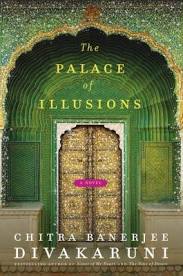
Title: The Palace of Illusions Author: Chitra Banerjee Divakaruni Genre: Historical Fiction, Mythological fiction, Novel Original Language: English “But by then we would all know this: war is like an avalanche. Once begun, it cannot cease until it has wreaked all the destruction it is capable of.” I had been thinking of reading this book…
Title: My Grandmother asked me to tell you she’s sorry Author: Fredrik Backman Translator: Henning Koch Original Language: Swedish Genre: Domestic Fiction, Novel “Because all seven year olds deserve Superheroes. And whoever disagrees with that need their head examined.” Elsa is 7 and different and Granny is 77 and crazy. And she is Elsa’s best…
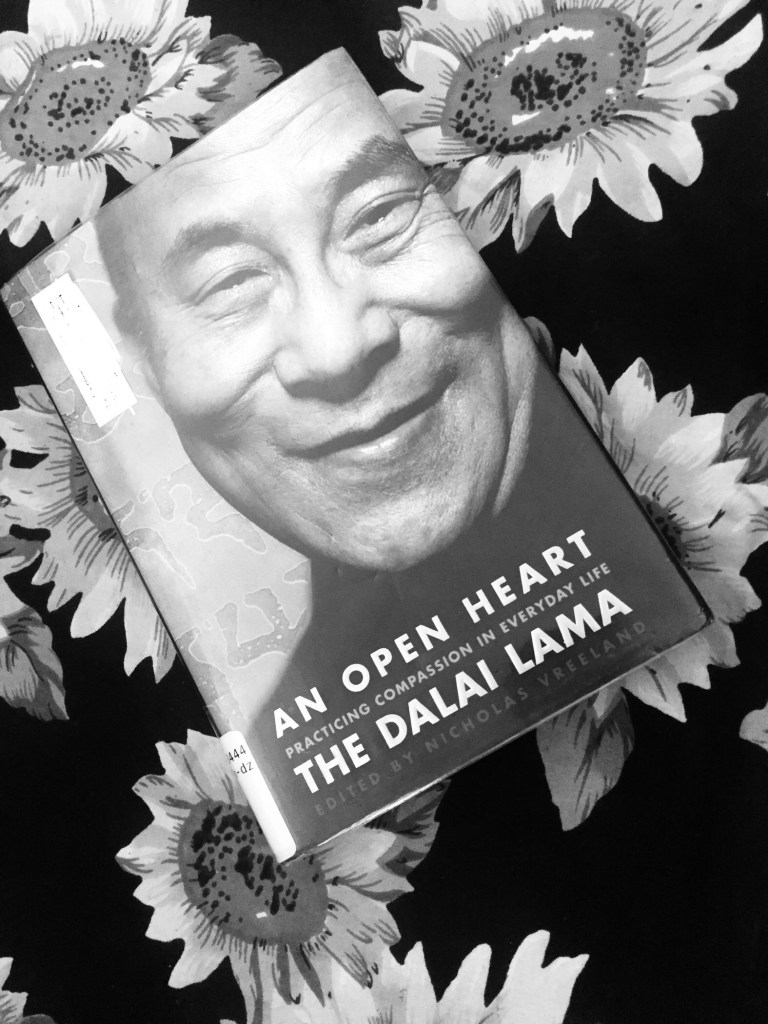
Title: An Open Heart-Practicing Compassion in Everyday Life
Author: The Dalai Lama
Edited By: Nicholas Vreeland
Afterword: Khyongla Rato and Richard Gere
This book is based on the series of talks that His Holiness Dalai Lama gave at The Tibet Centre and The Gere Foundation in New York City in August 1999.
An Open heart; Practicing compassion in everyday life is a wonderful book to fill the gap between our everyday realities and our spiritual pursuits. The Dalai Lama gives a practical approach to tame the mind into being more compassionate. He emphasizes that as long as we are living in a human society, it is very important to be a kind, warm-hearted person. The book is about how we can achieve that.
The Buddhist practitioners have cultivated this wisdom by which they are able to tap their compassionate hearts to seek happiness and fulfill desire by overcoming suffering. Buddha, Sangh, Dharma are the three jewels of refuge that help us in reaching our goals of happiness. The Dalai Lama teaches meditation techniques to change our habitual mind to be a more virtuous one. The difference between the material and immaterial world, the role of Karma, the afflictive emotions that hamper spiritual practice are certain points that are dealt with in this masterpiece.
The method to opening our hearts and the wisdom needed to do so lies within us. Recognizing our abilities towards a profound insight requires study and meditation, and for that we should have compassion. The term compassion is the feeling and a wish for others to be suffering free. We should have empathy, the ability to recognize suffering of others and a loving-kindness to feel compassion. Reading this book have certainly opened my vision to these mystical ideas.
The book talks about the sevenfold Cause-and-effect method and exchanging self for others to achieve a bodhicitta and become a bodhisattva. The nine stages of calm-abiding meditation or single-pointed concentration is a wonderful take from this book.
Having sympathy for others and the desire to free them of it – developing compassion are not easy concepts to digest but the way this beautiful book has been written, it simplifies the readers eagerness to understand and helps them imbibe the simplicity and power of these age old concepts. The meditation practices suggested in here are very deep and profound. This is one of the finest “perspective” books I have come across.
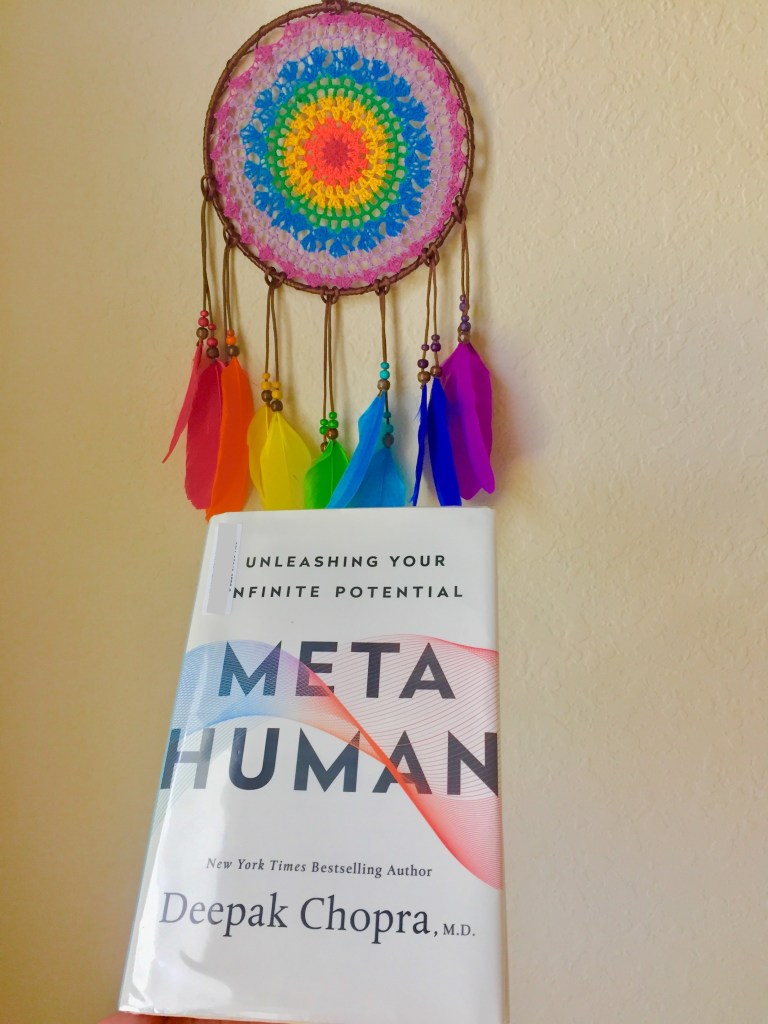
Title: Meta Human: Unleashing your infinite potential
Author: Dr. Deepak Chopra
Genre: Non fiction, Mind and body, Spiritual life, Self-realization, Self help
Original Language: English
A New York Times bestselling author, Dr. Deepak Chopra is an accomplished writer of over 90 books in addition to being a pioneer of integrative medicine. I have read a few of his books and I am a fan. He appeared on the Ancient Aliens show some time back aired on the History channel and he bowled everyone over yet again. He shared how he’s “totally at peace” in his life on his episode of “Quoted by” with Hoda Kotb that I connected with some time back. The first book that I came across was ‘The Chopra Centre Cookbook : Nourishing Body and Soul‘. Ya, that one out of the many he wrote was my first one. I liked it thoroughly.
My take from the book:
Dr. Chopra’s in depth understanding and insightful writing on these precariously difficult to understand concepts helped me to look at myself a little more closely. “Metahuman” is a delightful vision of the human potential and ways in which we can move beyond our limitations of the virtual mind. The way in which he roots his explanations in old as well as recent researches is very fulfilling. He is a maestro on this subject. What he is trying to do here is very courageous. Bridging the gap between the science of reality as we know it and the traditional concepts vetted in eastern philosophies is admirable. His differentiating between what we understand as reality (which in his words is an illusion) and the ultimate awareness of our being is perfectly bridged. The basis of this whole deep concept lies in the Indian tradition where pure consciousness is eternal, conscious and blissful (Sat Chit Ananda in sanskrit)
The staggering praise for METAHUMAN at the beginning of the book is quite overwhelming. I was so ready to read this reflective book. The book is lengthy and full of concepts from beyond and I have made a sincere attempt at looking them in the eye. I have tried to share my perception of these concepts as also my favorite pieces that I have quoted.
Please be warned that this is a long post as I have tried to integrate the concepts given in this book to the best of my abilities. Kindly be patient on this ride to beyond your limitations to access a field of possibilities.
“What causes real shock is that everything you perceive is adjusted. Floating molecules in the garden are adjusted into fragrances. Vibrating airwaves are adjusted into sounds you recognize and identify. There is no escaping that we live in a mind-made world. This is both the glory and peril of being human.”
Meta human as the name suggests is a book based on the concept of going beyond everyday awareness or self knowledge. Dr. Chopra believes that we live in a fantasy, an illusion that we created and can uncreate if we choose to. He quotes Planck from a 1931 interview with the Observer
“I regard consciousness as fundamental. I regard matter as derivative from consciousness. We cannot get behind consciousness. Everything that we talk about, everything that we regard as existing, postulates consciousness.”
He then goes ahead and quotes Werner Heisenberg, a German physicist
“What we observe is not nature itself, but nature exposed to our method of questioning.” “The atoms or elementary particles themselves are not real; they form a world of potentialities and possibilities.”
Dr.Chopra believes that every second of our lives is conscious, yet our conventional wisdom takes it for granted.
“Until metareality becomes a common experience, being human has not reached its full creative capacity.”
He even quotes the Israeli historian Yuval Noah Harari, who is an optimistic futurist in his book Homo Deus. (I am a big fan of Harari’s book Sapiens).
“on the cosmic scale of history humankind can lift its eyes up and start looking towards new horizons.”
But Chopra’s belief of consciousness belong to page 1 instead of page 409 of Harari as he writes it.
Part One of the book is about The Secrets of Meta-Reality. In this part Chopra talks about how we are entangled in an illusion. He postulates that something happened somewhere in prehistory when Homo sapiens just like that crossed over into virtual reality — which has always been a controversial concept, a little difficult to digest kind of concept. He talks about Dr. Parnia’s conclusion over the debate between Aristotle and Plato that a person is fully conscious without brain function where Aristotle was of the opinion that consciousness was a physical phenomenon while Plato found it nonphysical. He talks about how we can change our experience of what we interpret as our body. In the chapter “I” is the Creator of Illusion, he states that “I” or ‘the ego’ believes that it can manage the reality… but is that so? There are failures and retrials all the time. To let go of ego is what embracing infinity will be like. To let go of ego is what the hard part is. Is it not?
“‘I’ is a tiny thing, a single letter. But what you have built around it-what everyone has built around it-is like a coral reef made up of minuscule cells hardened over with a massive shell.”
I like how he explained the consequence of following the ego in the next lines
“Two people occupy a small dot on the map. Now expand the territory on a global scale. The human race is ravaging the planet because seven billion people, acting on the advice of “I”, prefer local experience over solving a global problem. Wars break out and populations incur death and destruction on a massive scale because the larger territory-maintaining amicable peace is sabotaged by the anger generated by every ‘I’ choosing to follow its irrational, angry, hostile agenda.”
I believe in the long run we used our minds to outwit Nature’s challenges to have finally become a consciousness-based species. As Dr. Chopra suggests, we all have a chaotic past which we build over time by making various choices regarding our likes and dislikes, our emotions, the memories that we create and hang on to. Also, the beliefs that are fed into us since we are babies, our experiences that we call life is what makes us who we are. The point is even though we have our experiences since our day one on earth, we are the ones who shape those experiences by our thoughts fed by the ego that we created. It’s our version of self.
“Our ability to edit reality is responsible for everything a human being can decide to pay attention to, and since we pay attention to billions of things, reality in its unedited state must be vastly larger.”
In the next chapter he emphasizes that the nature of human potential is infinite. The unlimited possibilities of thoughts, insights, creativity and discoveries that the humans possess makes us one of the most important consciousness-based species. In 2013 there came about a Hacking Creativity Project, the results of which were: (1) creativity is essential for solving complex problems; and (2), it is almost impossible to train people to be more creative. He states that Meta-Reality is ‘un-hackable’. Instead of training a skill in creativity we should be training a state of mind. He talks about the multiple dimensions of awareness and how our ancestors may have the potential to be fully aware, the clue to which may be embedded in the evolution of our species.
“Our nearest relations among living species are the chimpanzee and the gorilla, but we did not descend from them or any other ape, contrary to popular opinion. The last common ancestor between humans and chimpanzees lived around thirteen million years ago, according to the best current estimate, leading to a genetic split. One branch of the split evolved into chimps, gorillas, orangutans, and their relations, while the other branch led to our hominid ancestors.”
“Mind is the activity of thought. Consciousness is the field of pure awareness.” “Consciousness is the ocean, mind is the waves that play across the ocean’s surface.”
Meta-Reality offers absolute freedom. This is the title of chapter 4 in which Dr. Chopra asserts that we live in this virtual reality which is a setup, a trap. He holds the view that even though science is a liberating force, it has somehow blocked the vision of absolute freedom. He has quoted Pinker, a renowned psychologist from Harvard and Russian-American physicist Linde on several occasions. In the following lines he quotes Albert Einstein:
“A human being experiences himself, his thoughts and feelings as something separated from the rest, a kind of optical delusion of his consciousness. This delusion is a kind of prison for us, restricting us to our personal desires and to affection for a few persons nearest to us. Our task must be to free ourselves from this prison…”
The analogy of the painted lady butterfly who can do a whole bunch of things conspicuous to us understanding humans is something we can barely comprehend. Maybe the evolution has already created a reality for this beautiful creature. In Dr. Chopra’s view, the ‘mind, body, brain and universe are modified consciousness’ (as is the heading of his next chapter).
“”Everything, always, and everywhere” is the real story of creation. It alone tells us who we are and why we are here.”
In explaining how the collective consciousness created a sense of space, time, matter, energy and so forth; Dr. Chopra has given various examples of instincts in creatures around the world like the circadian biorhythm with which we wake and sleep are maybe imprinted in our genes. In one particular example, he talks about the red knot (a small sandpiper bird that migrates a long distance), timing its travel in accordance with a primordial event of horseshoe crabs spawning and how these little birds and the flora around them bring changes in themselves before the main event is purely on instinct. Or, could it be that the red knot’s DNA is hardwired to know every detail of the future?
We might speculate that animals live in the present moment, reacting to the instincts that tell them that now is the time to eat or sleep or hunt. But “present moment” doesn’t exist for a creature that has no concept of time.”
He finds solid physicality an illusion, but finds a more pressing issue to be whether human’s sense of consciousness is the creative force behind what he calls “something from nothing”.
“To evolve to metahuman, however, we need to stop thinking of creation in fixed terms. Reality must be rebuilt to account for the role consciousness plays. There are only two levels of reality. One level is unbounded pure consciousness, which is a field of potential. The other level is consciousness in its excited state (to borrow a phrase from particle physics), which we call the universe.”
By the time we reach chapter 6, Dr. Chopra is already on to the concept that existence and consciousness are the same. He believes that consciousness expands endlessly and that the clue is self-creation. That the simplest formulation of truth is the awareness and existence simply are, as in they are uncreated.
In time, Homo Sapiens rushed through another door, the one that opened to self-awareness. We can do anything with our potential that we want to, but no matter how civilization changes, it is impossible to be human without being aware.”
He rests part one by quoting Aldous Huxley, a British writer in the following lines —
“Each one of us is potentially Mind at Large. But in so far as we are animals, our business is at all costs to survive. To make biological survival possible, Mind at Large has to be funneled through the reducing valve of the brain and nervous system. What comes out at the other end is the measly trickle of the kind of consciousness which will help us to stay alive on the surface of this particular planet.”
In Part Two of the book Dr. Chopra teaches us “waking up”. Part one was all about the knowledge, while part two is about the experience.
Being stuck in virtual realty is like being under a hypnotic spell, and we can’t break the spell as long as it has us in its grip-there is no hypnotist standing by who can snap his fingers and break the spell for us.”
Dr. Chopra believes that we constructed and humanized our version of reality based on our experiences and we could break those shackles if we chose to.
He talks about the concept of reification – giving immaterial experiences “thingness” in that we can feel certain things in their quantum state but we create an awareness about those features in our mental state. Basically it means to be more aware of what we are experiencing through our senses.
“As ‘thingness’ stops being so stubborn, experience is transformed into something fluid, flexible and malleable. The reality of the ‘true self’ is critical, because, as things stand, everyone has a self filled with contradictions. The self you have been identifying with keeps you in the spell/dream/illusion. The true self takes you from illusion to reality.”
He tells us about the three versions of the self:
The ego: personality “I”
The unconscious self: where you perceive the surroundings even before being aware
The true self: where the ‘I am’ brings total fulfillment
Dr. Chopra then comes to the next chapter The Direct Path where he quotes the Vedas
The ancient Vedas declare that everyone is defined by their deepest desires. Desire leads to thoughts, thoughts to words and actions, actions to the fulfillment of desire. So in a very basic way, desire is all you need. If your deepest desire is to wake up, to escape the illusion, to unveil reality, and in the end to know who you really are, the message gets through. Your deepest desire activates a level of awareness that will get you to the goal.”
He says that there is a big gap between where we stand and the reality that exist. Its the pitfalls, he says that are painful, not waking up and that these pitfalls are created by the ‘I’.
Next he talks about Self-Regulation: The glue of existence and the sense of Self.
“Everything that exists ‘out there’ or “in here” is glued together by your sense of self, because it is the common denominator in every experience. Once you see this, you can identify with your sense of self, and then the direct path has reached its goal.
He says that awareness is present both inside and outside and that it does not depend on space. He summarizes part two of the book in the following lines
“The leap from human to meta human, the shift from virtual reality to the “real” reality, is all contained in the simple act of noticing the self. Not the ego, which wants to hog the limelight and claim that it and it alone is the self.”
Part Three is all about Being Metahuman. Here, concepts of freeing the body and recovering the whole mind are dealt with. Dr. Chopra provides an exercise in which he deals with the body in awareness, in continuation he teaches how to be timeless.
“Once you realize that you are whole, the transformation from human to meta human has occurred.”
In the next chapter, Dr. Chopra focuses on Recovering the Whole Mind.
“Whole mind contains the infinite potential that is unique to Homo Sapiens.”
He asks to do a daily exercise of eyes open, no thoughts to learn to live in wholeness naturally.
In Clearing the Way for the Self, he gives an example
“In one tale, a fish is frantic with thirst, rushing around to find a drink of water. Even at four years old a child laughs at the silly fish who doesn’t know it is surrounded by water. Only when you grow up does the seriousness of the paradox set in.”
He maintains that even though he says metareality is “always, everything and everywhere”, it is still a paradoxical situation. We have certain mistaken beliefs which we need to acknowledge and get over.
“When people speak of “aha” moments, insight and intuition have cut through a tangled problem and gone directly to the truth.” “The beauty of an insight is that it is self-justifying. You just know.”
The penultimate chapter is Choiceless Awareness where Dr. Chopra claims that ours is the only species that must try to be happy, but is it that easy I wonder? After giving a brief on Sigmund Freud’s years as a refugee and the trouble with which he had to flee his country, Dr. Chopra wrote the following lines which made me think how exactly humans can remain happy
“After paying an extortionate “flight” tax by which the Nazis ruthlessly stripped Jews of their money and property, the founder of psychoanalysis left for England in a state of pessimistic gloom, wondering as fear and terror blossomed like a poisonous flower if it was asking too much simply to prevent humans from committing murder.”
After reading this part, I have suddenly got a little curious about Sigmund Freud and how he had to flee. You know the perils of humanity. I would like to read something on these lines some time.
While talking about Practical immortality, Dr. Chopra implies that by using our imagination we fill in the blanks of our understanding and that it is a constant practice.
“Using our imagination is one way you and I and everyone else are living the mystery. No one created imagination, just as no one created creativity. No one created evolution, either. When you get closer to the source, where consciousness in all its diversity begins to narrow down to one thing, it is evident that being human depends on contacting the immortal domain constantly, not just every day but every second.”
“For our entire lives, all of us have been taught how to live in the state of practical immortality. Everything is gauged according to how it fits in between birth and death.”
The final chapter One Life as the name suggests points towards being whole, the collective consciousness which is governed by one consciousness.
This book has proposed that creation unfolds from pure consciousness. There is no divine artist with a picture in mind. There is just creation evolving without end.” “The evolution of consciousness is the only explanation for creation that holds everything together.”
Dr. Deepak Chopra ends this part of the book as follows after which he gives a 31-day guide to becoming METAHUMAN.
The average person isn’t prepared to accept responsibility for the spell/ dream/illusion we are entangled in. The accumulation of greenhouse gases can be explained as divine retribution, or as the outcome of a series of very unfortunate events, or as human imperfection screwing up one more thing. Self-destruction is part of our nature, but self-creation is infinitely more powerful. By waking up, metahumans can make right what humans have done wrong. Waking up happens only one person at a time. Reality isn’t a numbers game. Its a one-player universe, and you and I are enough to move creation itself.”
The final word here is the simple understanding of the concept that it is impossible to codify the invisible that makes us human. What does make us human? To be human, we need to learn to pay attention.We need to understand and remember what it means all the while keeping it in the mind and be able to go back to it when we want to. We have to aim at the three experiences: to see reality more clearly, feel less entangled in habit, memory and the like, and stop drooling over external rewards and expectations. Dr.Chopra in this book argues that if we go beyond the physical world, we would wake up to consciousness- experiences that will blow open our minds, bodies and souls.
Sum up Quotes:
“anything you can count, measure, calculate and reduce to data is part of an all encompassing illusion.” “Whatever you perceive, imagine or think about in words inhabits the same illusion.” “It is the state of separation we keep reinforcing, generation after generation.” to be experienced directly.” “But only waking up allows for the unity of one life.”
“If we can create a world of glorious highs without being fully awake, imagine what we could do with our eyes wide open.”
There is so much to absorb from this book. I recommend to go slow, let each word, each sentence, each concept sink in bite by bite. The understanding of this book lies in an open mind. So while you are at it reading this wonderful take on life, keep your inner eyes open.














 The Spell Bound